Pinched Nerve in the Lower Back: Symptoms, Causes, and Non-Surgical Relief
D
Dr. Annunciato Angelini
Lead Chiropractor, Certified Cox Decompression Provider, 23+ Years
|October 23, 2026 10 min read
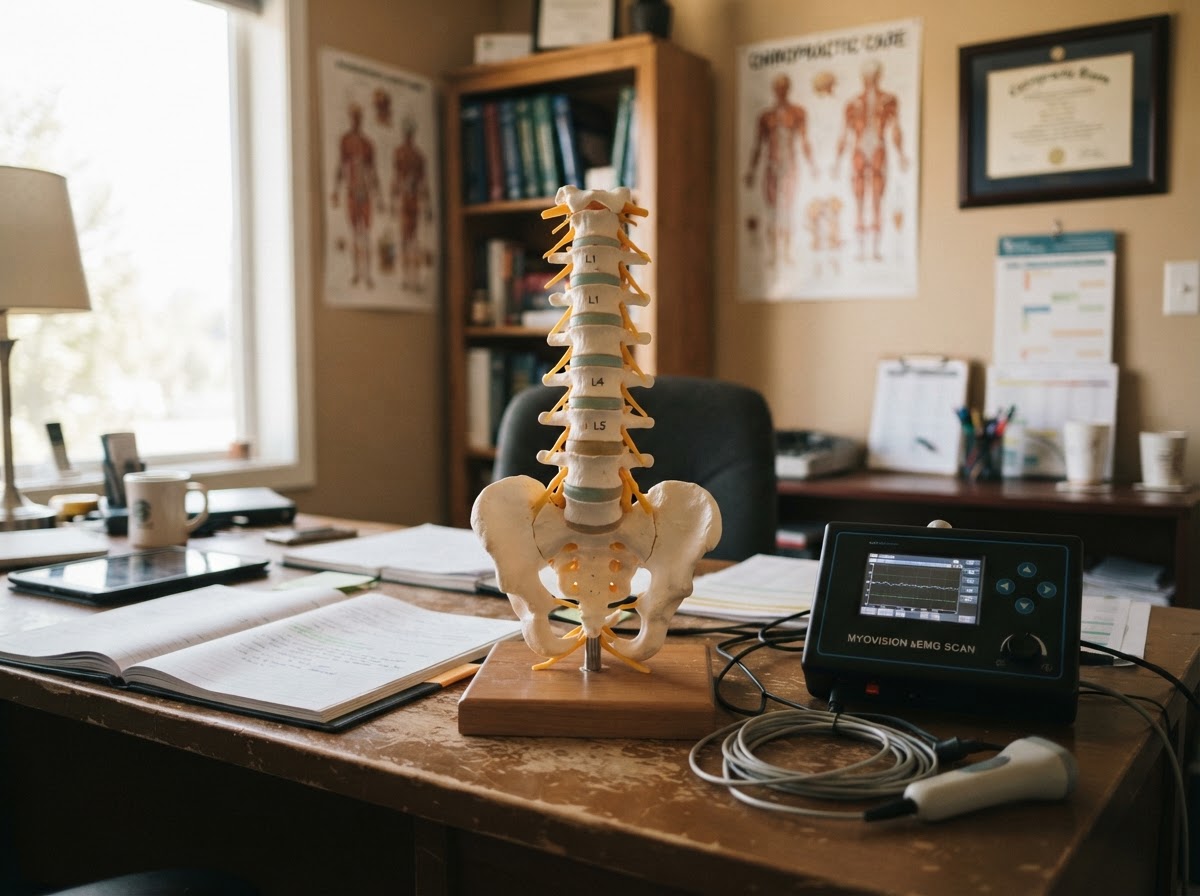
lumbar spine anatomical model and nerve scan device for pinched nerve lower back relief in Windsor
A pinched nerve in the lower back is one of the most common, and most misunderstood, sources of pain we see at Active Chiropractic in Windsor. You might feel a sharp, electric jolt that shoots from your low back down through your buttock and leg, You might wake up with numbness in your foot, or notice your leg feels weak when you climb stairs, What surprises most patients is that the pain in your leg is not actually coming from your leg, it is coming from a nerve root in your lower back that is being compressed or irritated, a condition clinically known as lumbar radiculopathy, The good news is that the vast majority of pinched nerves in the lower back can be relieved without surgery, injections, or a lifetime of pain medication, In this guide, Dr. Annunciato Angelini explains what a pinched nerve really is, what causes it, how to tell it apart from other kinds of back pain, and the gentle, non-surgical approaches, including Cox Technic spinal decompression, that help our Windsor patients get their lives back.
What does a pinched nerve in the lower back actually feel like?
A pinched lumbar nerve root produces a distinctive pattern of symptoms that is very different from a simple muscle strain, Because the affected nerve carries sensation and motor signals down into your leg, the pain often travels, sometimes all the way to your foot, This is the key clue that separates a pinched nerve from ordinary low back pain: the symptoms follow the path of the nerve.
Sharp, shooting, or electric pain that radiates from the lower back into the buttock, thigh, calf, or foot
Numbness or a pins-and-needles tingling in the leg, foot, or toes
Muscle weakness, such as difficulty rising onto your toes, walking on your heels, or a knee that buckles
Pain that worsens with sitting, coughing, sneezing, or straining, all of which increase pressure in the spine
A feeling that your leg is heavy, tired, or 'giving way' after walking a short distance
Reflex changes, such as a diminished knee-jerk or Achilles reflex, that a clinician can detect on examination
It is worth noting that a pinched nerve does not always cause severe pain, Some patients feel mostly numbness or weakness with very little pain, while others describe a burning or aching sensation more than a sharp one, The exact symptoms depend on which nerve root is compressed and how badly it is irritated, which is why a thorough examination matters so much.
What causes a pinched nerve in the lower back?
Several different structures in the lower back can compress a nerve root, and identifying the specific cause is what guides the right treatment, The most common culprits include:
Herniated or bulging disc: The soft inner gel of an intervertebral disc pushes outward through a tear in the outer ring and presses directly on a nearby nerve root, This is the single most common cause of lumbar radiculopathy, especially at the L4-L5 and L5-S1 levels.
Spinal stenosis: A narrowing of the spinal canal or the openings where nerves exit, often from a combination of disc thinning, bone spurs, and thickened ligaments, Stenosis typically causes leg pain, cramping, and weakness that comes on with walking and eases when you sit or lean forward.
Degenerative disc disease: As discs lose height and water content with age, the space available for the nerve roots shrinks, increasing the chance of irritation.
Spondylolisthesis: One vertebra slips forward over the one beneath it, narrowing the nerve exit and sometimes stretching the nerve root.
Piriformis syndrome: A tight deep hip muscle compresses the sciatic nerve in the buttock, mimicking a lumbar pinched nerve even though the problem is lower in the chain.
Facet joint cyst or inflammation: A swollen joint at the back of the spine can crowd the nerve exit and create radicular symptoms.
Understanding which of these is responsible matters because the treatment differs, A herniated disc often responds beautifully to spinal decompression, while stenosis may call for a combination of flexion-based mobilization, posture work, and specific exercises, This is why we never assume the cause from symptoms alone, We examine, we scan, and we build the plan around what is actually happening in your spine.
Pinched nerve vs. sciatica vs. ordinary back pain: what is the difference?
These terms get used interchangeably, but they describe different things, Ordinary low back pain usually stays in the lower back and is often muscular or joint-related, Sciatica is a specific type of pinched nerve pain that follows the path of the sciatic nerve, down the back of the leg, Lumbar radiculopathy is the broader medical term for any nerve root in the lower back being compressed, whether the pain travels down the sciatic path or down the front of the thigh via the femoral nerve, If your pain travels past your knee into your calf or foot, or comes with numbness or weakness, a pinched nerve is almost certainly involved, and that changes both the diagnosis and the treatment.
The most important step with a pinched nerve is not rushing to surgery, It is getting a precise picture of which nerve root is irritated and why, because that precision is what lets us relieve it gently and keep it from coming back.
How we diagnose a pinched nerve at Active Chiropractic
Your first visit begins with a detailed conversation about your symptoms, how they started, and what makes them better or worse, From there, Dr. Angelini performs a thorough orthopedic and neurological examination, This includes testing your reflexes, sensation, and muscle strength in specific patterns that map to individual nerve roots, along with nerve tension tests such as the straight-leg raise, We also use computerized nerve scanning to objectively measure where your nervous system is under stress, often revealing the irritated level before it is obvious on imaging.
In many cases this clinical picture is enough to build an effective care plan, If your examination reveals red-flag signs such as progressive muscle weakness, loss of reflexes, or changes in bowel or bladder function, we refer you promptly for MRI imaging and, when appropriate, a surgical consultation, Those situations are the exception, not the rule, For the large majority of pinched nerve cases, conservative chiropractic care is both the safest and most effective first step.
Non-surgical relief: how we treat a pinched nerve in the lower back
Our approach is built around relieving the pressure on the nerve, calming the inflammation around it, and restoring healthy mechanics so the compression does not return, The exact combination is tailored to your examination, but the core tools include:
Cox Technic spinal decompression: A gentle, doctor-guided table treatment that opens the space between the vertebrae, lowers pressure inside the disc, and can draw a bulging disc back toward center, taking the pressure off the nerve root, There is no cracking, twisting, or forceful thrusting.
Gentle spinal alignment: Precise, low-force adjustments restore normal motion to restricted spinal joints and reduce the mechanical irritation that keeps a nerve inflamed.
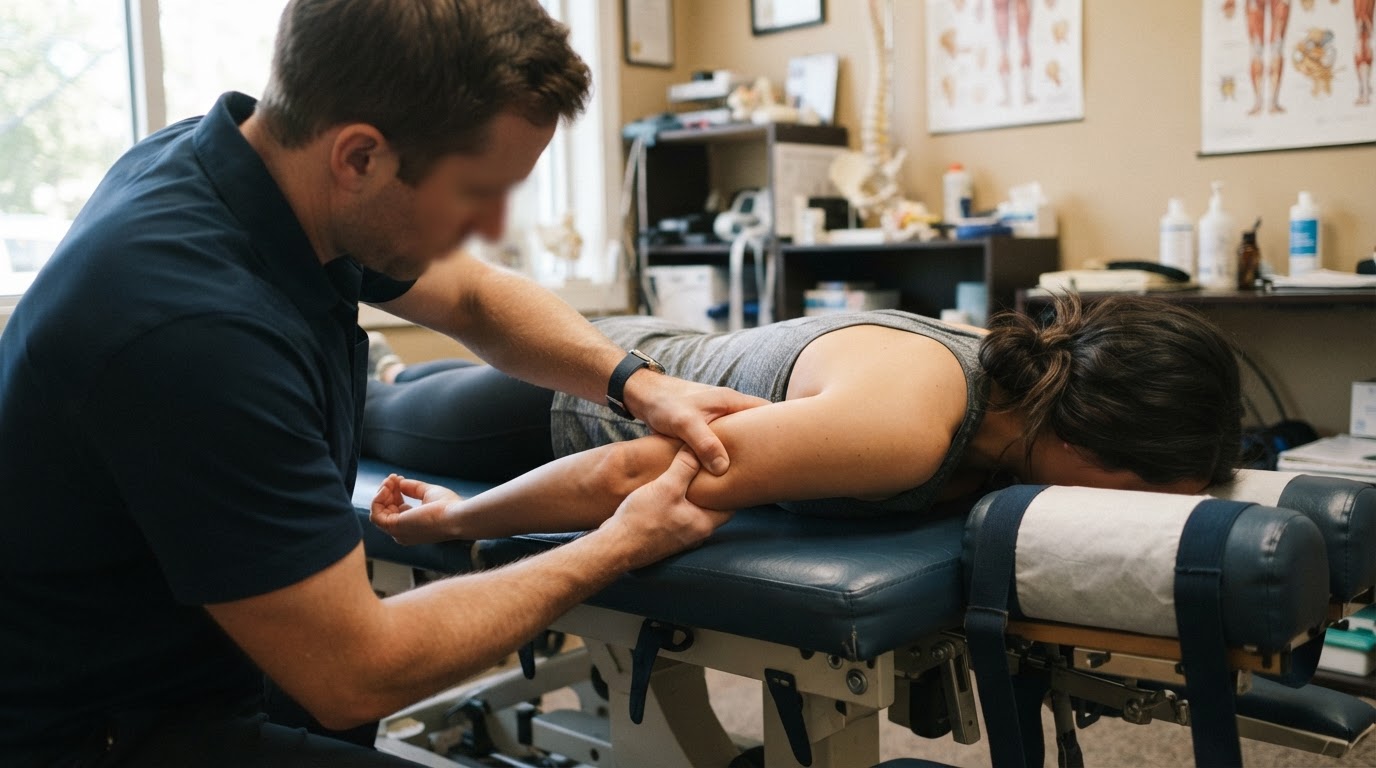
Active Release Techniques (ART): Hands-on soft-tissue work that breaks down scar tissue in the muscles around the spine and pelvis, freeing nerves that have become glued down by adhesions and reducing the protective muscle spasm that adds to the compression.
Customized home exercises: Simple, targeted movements that stabilize the spine, open the nerve pathways, and keep the problem from returning once the acute pain settles.
Posture and activity coaching: Guidance on sitting, lifting, sleeping, and movement patterns that either help or harm a healing nerve, so your daily life supports the work we do in the clinic.
Because we re-scan your nervous system throughout your care plan, progress is measurable rather than just felt, Many patients experience meaningful relief within the first several visits, and we taper care as the nerve heals rather than keeping you on an open-ended schedule.
When is surgery actually necessary for a pinched nerve?
Surgery has an important but limited role, It is generally reserved for cases where there is progressive muscle weakness, a foot drop that worsens, severe and unrelenting pain that has not responded to a genuine course of conservative care, or the rare red-flag signs of cauda equina syndrome such as saddle numbness or loss of bowel or bladder control, Even then, clinical guidelines recommend a thorough trial of conservative treatment first, because a meaningful percentage of spinal surgeries do not deliver lasting relief and can lead to what is known as Failed Back Surgery Syndrome, For the vast majority of pinched nerves, the gentle road is both safer and more effective, and it preserves all of your options if surgery ever does become necessary down the line.
What you can do at home right now
While you are waiting for your appointment, a few simple steps can take pressure off the nerve and keep things from getting worse, Avoid prolonged sitting, especially in soft or reclined positions, which raise pressure inside the lumbar discs, Skip heavy lifting and any bending combined with twisting, the classic movement that aggravates a disc, Try lying on your back on a firm surface with your lower legs elevated on a chair or ottoman at ninety degrees, a position that unloads the lower back and gives the nerve room to breathe, Stay hydrated, because discs rely on fluid to maintain their height and cushioning, And resist the urge to stretch aggressively; pulling hard on a nerve that is already irritated can intensify the symptoms rather than relieve them.
If your leg pain is accompanied by progressive weakness, a foot that drags, or any loss of bowel or bladder control, seek urgent medical care, These are red-flag signs that need immediate attention, For the large majority of pinched nerves, though, gentle non-surgical care is the safest and most effective first step.
The takeaway
A pinched nerve in the lower back is painful and frightening, but it is rarely a surgical emergency, With a precise diagnosis and gentle, non-surgical care like Cox Technic spinal decompression, spinal alignment, and Active Release Techniques, most lumbar radiculopathy resolves completely and stays resolved, letting you return to the activities you love without the shooting leg pain running your life.
Related Care & Clinic Guides
Explore how our team supports patients recovering from these specific conditions in Windsor:
#pinched nerve lower back#lumbar radiculopathy relief#how to treat a pinched nerve in back#Sciatica Windsor#Herniated Disc#Non-Surgical Back Pain#Windsor Chiropractor
Have a question about this?
The best way to know if this applies to you is a hands-on assessment. Let's take a look together.

 Soft Tissue & Sports