5 Clinically Proven Reasons to Try Active Release Techniques (ART) for Chronic Pain
D
Dr. Annunciato Angelini
Lead Chiropractor, Certified ART Provider (23+ Years)
|March 15, 2024 8 min read
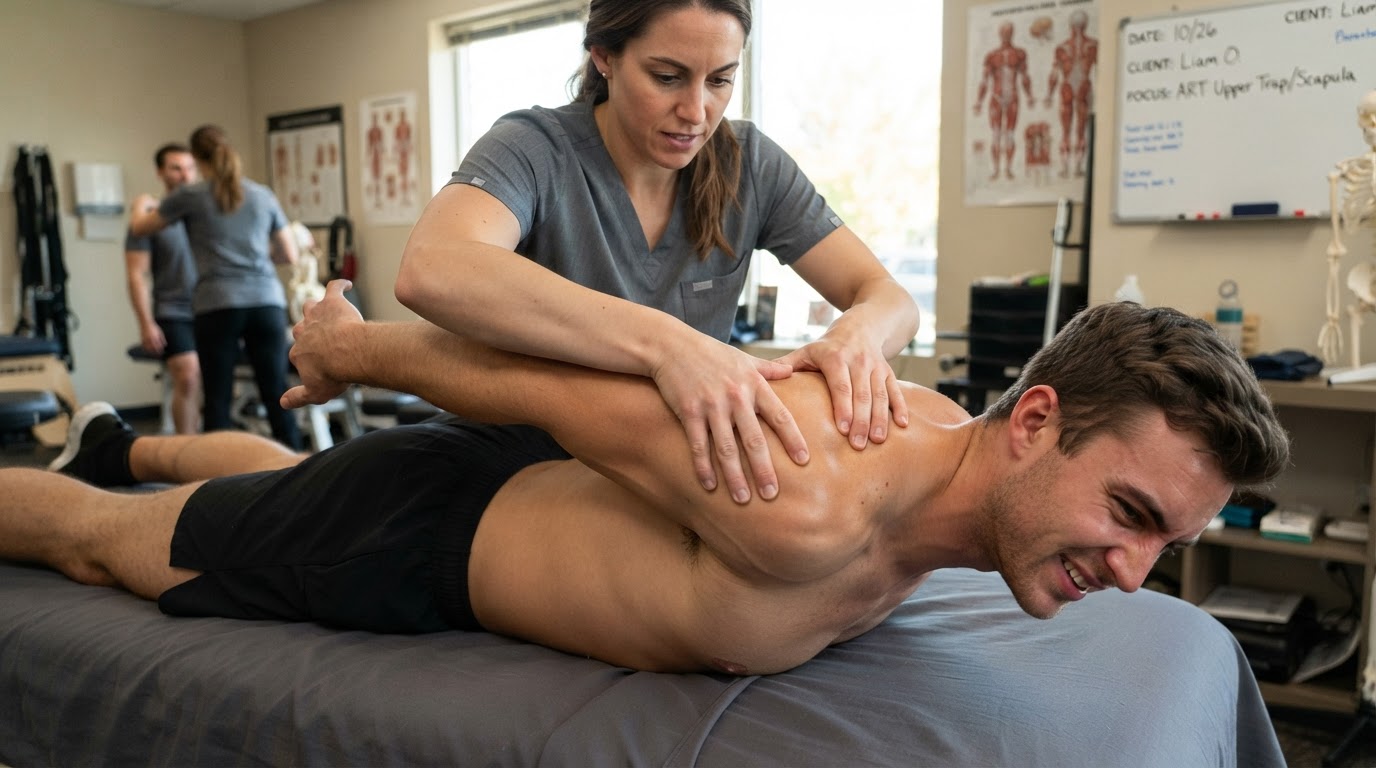
active release techniques ART treatment session for muscle scar tissue in Windsor
If you have been managing stubborn pain in your shoulder, hip, elbow, or back that simply refuses to budge after weeks of icing, resting, and standard stretching, you are dealing with a problem far more common than most patients realize: cumulative soft tissue trauma and dense myofascial scar tissue. Active Release Techniques (ART) is an internationally recognized, patented soft-tissue management system designed specifically to evaluate and resolve disorders within muscles, tendons, ligaments, fascia, and peripheral nerves. At Active Chiropractic in Windsor, Ontario, Dr. Annunciato Angelini has utilized certified Active Release Techniques for over two decades to help competitive athletes, factory team members, and desk workers eliminate chronic pain and regain full functional biomechanics without medications or surgery.
Understanding the Cumulative Injury Cycle: Why Rest Alone Never Solves Chronic Scar Tissue
Every physical movement we make depends on smooth, frictionless sliding between distinct muscular layers, fascial sheaths, and delicate peripheral nerve trunks. When a muscle is subjected to acute trauma (such as a sudden lifting strain) or micro-trauma from repetitive motions (such as typing at a workstation, operating equipment on an assembly line, or swinging a tennis racquet thousands of times), micro-tears develop in the tissue fibers. In response to continuous micro-tearing, the human body initiates an emergency repair mechanism by laying down dense fibrous collagen matrix—commonly known as scar tissue or internal adhesions.
Unlike supple, healthy muscle fibers that stretch and contract elastically like fresh rubber bands, scar tissue is rigid, sticky, unorganized, and hypoxic (lacking oxygen). As adhesions proliferate across fascial planes, adjacent muscular groups become physically glued together. The result is a self-perpetuating cumulative injury cycle: repetitive motion creates friction and tissue hypoxia; hypoxia triggers fibroblasts to produce more scar tissue; the scar tissue increases internal drag and weakens the muscle; and the weakened muscle suffers even more micro-tears under ordinary everyday loads. Resting gives transient symptomatic relief because you have temporarily ceased provoking the tissue, but the moment you return to your sport, shift, or gym workout, the dense mechanical adhesions are still firmly locked in place.
Reason 1: ART Directly Breaks Down Internal Adhesions and Restores Tissue Glide
Standard relaxation massage works broadly across superficial surface tissues with kneading strokes that improve localized circulatory flow and reduce nervous system sympathetic tone. While pleasant and beneficial for general relaxation, general massage lacks the directional vectoring and active biomechanical tension required to cleave dense collagen cross-links within deep muscular structures. Active Release Techniques differs fundamentally because it combines precise doctor-applied manual contact tension directly over the lesion with active patient-directed anatomical lengthening through full ranges of motion.
During an ART treatment at our Windsor clinic, Dr. Angelini uses his hands to palpate the texture, tension, and movement of each individual muscle belly, tendon origin, and fascial interface. Once an adhesion is localized, he locks the tissue in a shortened position with specific directional thumb or finger contact, and instructs you to actively move the corresponding limb or spine into a fully lengthened vector. This shearing force mechanically breaks the microscopic cross-links between tethered muscle planes, immediately restoring natural sliding and dramatically lowering resting muscle tension.
Reason 2: ART Releases Entrapped Peripheral Nerves Causing Numbness, Tingling, and Radiating Aches
Nerves do not exist in isolation; they must glide smoothly through tight tunnels, between muscle bellies, and beneath fibrous fascial arcades as our limbs bend and reach. When surrounding soft tissues develop chronic inflammation and scar tissue, the peripheral nerve can become literally trapped or tethered along its anatomical track. This produces peripheral nerve entrapment syndromes that frequently mimic spinal disc bulges—generating burning pain, electric shooting sensations, numbness, and tingling that travel downstream into the fingertips, forearm, buttocks, or toes.
Median nerve entrapment in the forearm and pronator teres mimicking or contributing to Carpal Tunnel Syndrome
Ulnar nerve tethering behind the medial epicondyle (cubital tunnel) creating pinky finger numbness and grip weakness
Radial nerve compression beneath the supinator and extensor muscles causing chronic outer elbow and forearm burning
Sciatic nerve entrapment under an hypertonic piriformis muscle causing shooting leg aches mistaken for lumbar disc herniation
Lateral femoral cutaneous nerve compression producing numbness and stinging along the front-outer thigh (meralgia paresthetica)
Active Release Techniques features specialized nerve glide protocols that free the entrapped nerve from surrounding fibrotic tissue. By anchoring the restrictive muscular border while the patient moves the nerve through its full excursion pathway, the nerve is gently mobilized. Once the entrapment is cleared, normal neural conductivity, blood perfusion, and sensation return rapidly.
Reason 3: Accelerates Sports and Workplace Injury Rehabilitation Without Extended Downtime
For competitive athletes, marathon runners, crossfitters, golfers, and industrial tradespeople throughout Windsor-Essex County, prolonged inactivity is not just frustrating—it leads to muscle atrophy, joint deconditioning, and compensatory strains elsewhere in the body. Traditional protocols often suggest weeks or months of complete rest, followed by passive ultrasound or electric stimulation. While passive modalities can help settle acute inflammation, they do not remediate underlying structural adhesions.
Active Release Techniques is famous throughout professional sports leagues including the NHL, NFL, MLB, and Ironman triathlons specifically because it is proactive, functional, and fast-acting. Because ART directly resolves the structural cause of the mechanical friction, many patients experience significant improvements in mobility, pain reduction, and muscular activation within four to six targeted sessions. Furthermore, because ART is an active therapy, patients can frequently continue modified training and work activities throughout their care plan rather than sitting idle on the sidelines.
In over 23 years of clinical practice in Windsor, I have seen patients who spent months struggling with recurring plantar fasciitis, shoulder impingement, or tennis elbow achieve complete, lasting breakthrough once we isolated and released the underlying adhesions with ART.
Your joints can only move as freely as the soft tissues crossing them will permit. If a muscle such as the subscapularis in the shoulder or the psoas in the front of the hip is shortened and fibrotic, the joint cannot track inside its normal physiological axis. Every time you throw a ball, reach overhead into a cabinet, or take a running stride, the joint surfaces grind unevenly. Over time, this abnormal friction leads to labral fraying, rotator cuff impingement, bursitis, and premature degenerative joint changes.
When you try to compensate for a tight hip flexor or stiff shoulder, your lumbar spine or neck is forced to twist excessively to make up the missing range of motion. By restoring optimal length, elasticity, and compliance to the primary soft tissue movers through ART, the associated joint is relieved of abnormal rotational shear. When combined with chiropractic spinal adjustments, the entire neuromusculoskeletal chain operates in perfect biomechanical harmony.
Reason 5: Non-Invasive, Non-Surgical, and Highly Personalized to Your Exact Anatomy
There is no one-size-fits-all prescription in soft tissue care. Over 500 specific protocols exist within the Active Release Techniques curriculum, covering virtually every muscle, ligament, and tendon in the human body. Every session is completely individualized based on Dr. Angelini's hands-on assessment of your exact anatomical restrictions on that given day.
Completely non-invasive: no injections, cortisone shots, pharmaceutical side effects, or surgical incisions
Integrates directly with computerized nerve scanning to verify reduced neuromuscular stress levels
Includes tailored functional home exercises and postural corrections to prevent adhesions from reforming
Empowers patients to understand exactly which movement patterns triggered their initial tissue breakdown
If you are preparing for your first ART session, drink plenty of water beforehand. Hydrated soft tissues are significantly more responsive to manual tension, allowing adhesions to release more cleanly and comfortably.
What to Expect During Your Active Release Treatment at Active Chiropractic in Windsor
When you visit our clinic on Tecumseh Road East in Windsor, your appointment begins with a thorough orthopedic, neurological, and soft-tissue examination. Dr. Angelini assesses your posture, active range of motion, and tissue texture. During the treatment itself, you will feel precise, targeted pressure applied to the affected muscle, followed by active guided movement of your limb. Patients often describe the sensation as a 'good hurt' or a profound therapeutic stretch, followed by an immediate sense of lightness, warmth, and increased freedom of movement.
The takeaway
Chronic pain, stubborn stiffness, and trapped nerves rarely resolve through rest alone. Active Release Techniques directly breaks down restrictive scar tissue, restores normal nerve glide, and fixes mechanical joint dysfunction at the source.
Related Care & Clinic Guides
Explore how our team supports patients recovering from these specific conditions in Windsor:
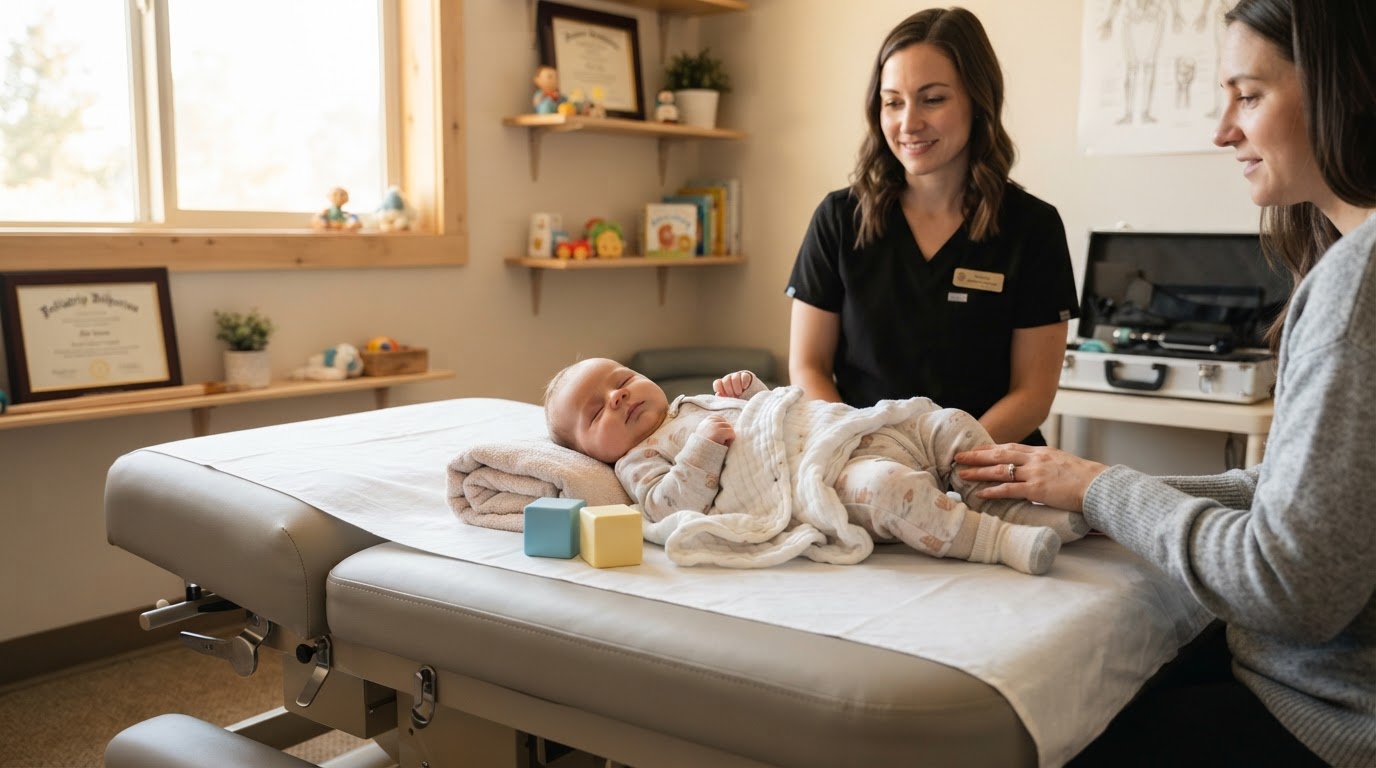 Family & Pediatric Care