Herniated Disc and Sciatica: Understanding the Root Cause and How Non-Surgical Decompression Fixes It
D
Dr. Annunciato Angelini
Lead Chiropractor, Certified Cox® Decompression Provider (23+ Years)
|April 19, 2024 10 min read
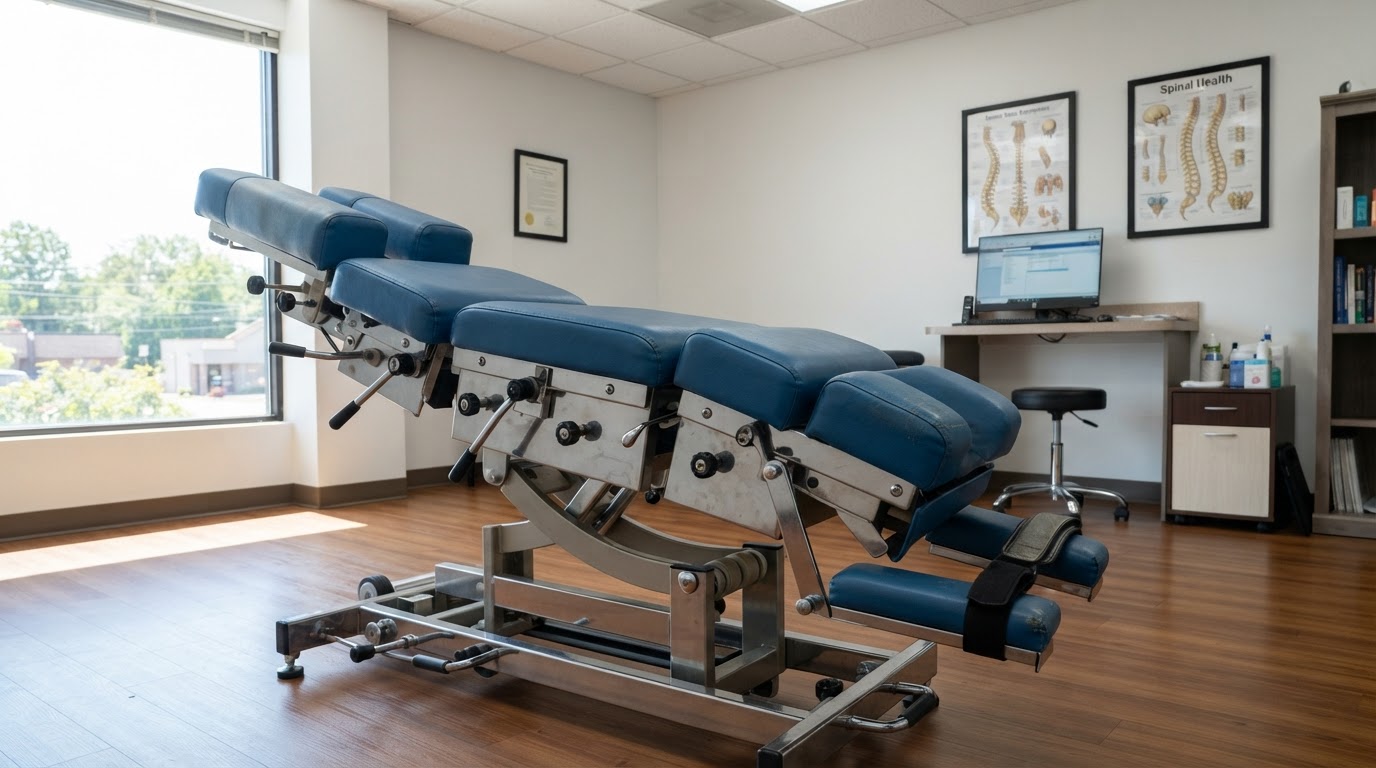
lumbar herniated disc and sciatica flexion distraction decompression table at Windsor clinic
It often starts with a sudden, seemingly harmless movement—bending down to tie your shoes, lifting a heavy grocery box from the trunk of your car, or standing up after a long commute on the E.C. Row Expressway. Suddenly, a sharp catch hits your lower back, followed over the coming hours or days by a deep, agonizing ache that shoots like lightning down your buttock, hamstring, calf, and into your foot. This is sciatica—one of the most debilitating and universally feared pain conditions known to medicine. At Active Chiropractic in Windsor, Ontario, Dr. Annunciato Angelini has helped thousands of patients resolve severe lumbar disc herniations and debilitating sciatica over more than two decades of dedicated clinical practice, using researched Cox® spinal decompression to restore disc health without invasive surgery or reliance on painkillers.
What Is the Sciatic Nerve, and Why Does It Cause Such Intense Pain?
The sciatic nerve is the largest and longest single peripheral nerve trunk in the entire human body. Originating from the merging of five distinct spinal nerve roots in the lower back and sacrum (specifically L4, L5, S1, S2, and S3), the sciatic nerve reaches the thickness of an adult thumb. It exits the pelvis through the greater sciatic foramen, passes deep beneath the piriformis muscle in the buttock, and travels down the back of the thigh before bifurcating at the knee into the tibial and common peroneal nerves to innervate the lower leg, ankle, and foot.
Because the sciatic nerve transmits sensory signals from virtually the entire lower leg and motor commands to all the powerful hamstring and calf muscles, any compression or inflammatory irritation at its spinal roots produces severe, far-reaching clinical symptoms. Patients describe sciatica as a constellation of agonizing sensations: electric shocks traveling down the leg, searing heat, deep gnawing bone aches, pins-and-needles paresthesia, and alarming numbness in the toes or foot.
The Primary Culprit: Lumbar Disc Bulges, Protrusions, and Extrusions
While there are several potential causes of sciatic nerve irritation (including piriformis syndrome, spinal stenosis, and spondylolisthesis), over 85% of clinical sciatica cases are caused by a lumbar intervertebral disc herniation—most commonly at the L4-L5 or L5-S1 spinal motion segments. The L4-L5 and L5-S1 discs endure the greatest cumulative mechanical shear and compressive loads in the human skeleton.
When a person spends decades sitting with a slouched lumbar spine, repeatedly lifts heavy objects with poor spinal posture, or experiences acute rotational trauma, the tough concentric rings of the annulus fibrosus suffer progressive micro-tears. Under vertical hydraulic pressure, the pressurized, water-rich nucleus pulposus pushes backward through the torn fibers toward the spinal canal. When the bulging or herniated disc collides with the traversing L5 or S1 nerve root, it triggers profound mechanical entrapment and severe chemical radiculitis.
L4-L5 vs. L5-S1 Herniations: Understanding Your Exact Pain Pattern
L4-L5 Herniation (Affecting L5 Nerve Root): Pain radiates down the posterolateral hip, through the side of the thigh, across the outer knee, down the shin into the top of the foot and the big toe. Classic motor sign: difficulty walking on your heels due to weakness in the tibialis anterior and extensor hallucis longus muscles ('foot drop').
L5-S1 Herniation (Affecting S1 Nerve Root): Pain shoots down the center of the buttock, through the back of the hamstring, directly into the calf muscle, Achilles tendon, heel, and the outer border of the foot to the baby toe. Classic motor sign: difficulty rising onto your toes due to calf (gastrocnemius/soleus) weakness, accompanied by an absent or diminished Achilles tendon reflex.
L3-L4 Herniation (Affecting L4 Nerve Root): Pain radiates across the front-inner thigh into the knee and inner shin; weakness in the quadriceps muscle, causing the knee to buckle unexpectedly during walking.
When an MRI reveals a lumbar herniation, many patients believe surgery is their only option. In reality, clinical research shows that conservative, gentle spinal decompression achieves superior long-term functional recovery for the vast majority of patients.
Why Surgery Often Fails to Provide Lasting Relief: The Reality of Failed Back Surgery Syndrome
Surgical procedures for lumbar herniations—such as microdiscectomy, laminectomy, and spinal fusion—involve cutting away the herniated disc fragment or permanently fusing the adjacent spinal vertebrae with metal rods and screws. While microdiscectomy can quickly decompress a nerve in acute emergencies, it permanently reduces the disc's structural height, increases mechanical stress on adjacent vertebrae, and creates epidural scar tissue that frequently adheres to the nerve root.
Furthermore, surgery does not correct the underlying abnormal posture, pelvic tilt, or movement dysfunction that caused the disc to blow out in the first place. Studies indicate that up to 40% of lumbar spine surgeries result in 'Failed Back Surgery Syndrome' (FBSS), where patients continue to suffer from persistent or worsening pain years down the road. For this reason, clinical practice guidelines worldwide recommend a minimum of 6 to 12 weeks of evidence-based conservative care before surgery is even contemplated.
The Proven Solution: Cox® Technic Flexion-Distraction Lumbar Decompression
At Active Chiropractic, Dr. Annunciato Angelini provides certified Cox® Technic lumbar decompression—the most thoroughly researched, federally validated non-surgical protocol for disc herniations and sciatica in the world. Utilizing a specialized, motorized biomechanical decompression table, Dr. Angelini secures your ankles and applies calibrated, slow, rhythmic flexion traction directly to the herniated lumbar segment while his hand gently guides the vertebra.
Generates Negative Intradiscal Pressure: Lowers internal pressure inside the damaged disc to -100 to -150 mm Hg, creating a powerful suction that draws the herniated gelatinous mass back into its anatomical boundary.
Increases Spinal Canal & Foraminal Space: Increases the diameter of the spinal canal and exit holes (intervertebral foramina) by up to 28%, immediately relieving physical pinching on the inflamed sciatic roots.
Restores Vital Disc Hydration: Unlike other tissues with rich blood supply, adult discs rely on fluid movement ('imbibition') for nutrition. Decompression pulls water, oxygen, and amino acids deep into the disc to heal annular tears.
Zero High-Velocity Twisting: There is absolutely no aggressive cracking or rotational twisting of the spine, making it exceptionally safe even for severe acute herniations and post-surgical back pain.
If you are suffering an acute sciatica flare-up, avoid sitting in soft, deep couches or slouching in recliners, which spikes lumbar intradiscal pressure by over 180%. Instead, lie flat on the floor with your knees bent at 90 degrees and supported by a chair (the 'psoas rest position') to take the compressive load off your lower back.
The takeaway
Sciatica and lumbar disc herniations can be excruciating, but invasive surgery and addictive medications are rarely the answer. Gentle Cox® decompression naturally reduces intradiscal pressure, relieves pinched sciatic nerve roots, and delivers proven, lasting healing.
Related Care & Clinic Guides
Explore how our team supports patients recovering from these specific conditions in Windsor:
 Soft Tissue & Sports