What Is Spinal Decompression, and Can It Help Your Back?
D
Dr. Annunciato Angelini
Lead Chiropractor, Certified Cox Decompression Provider, 23+ Years
|October 16, 2026 9 min read
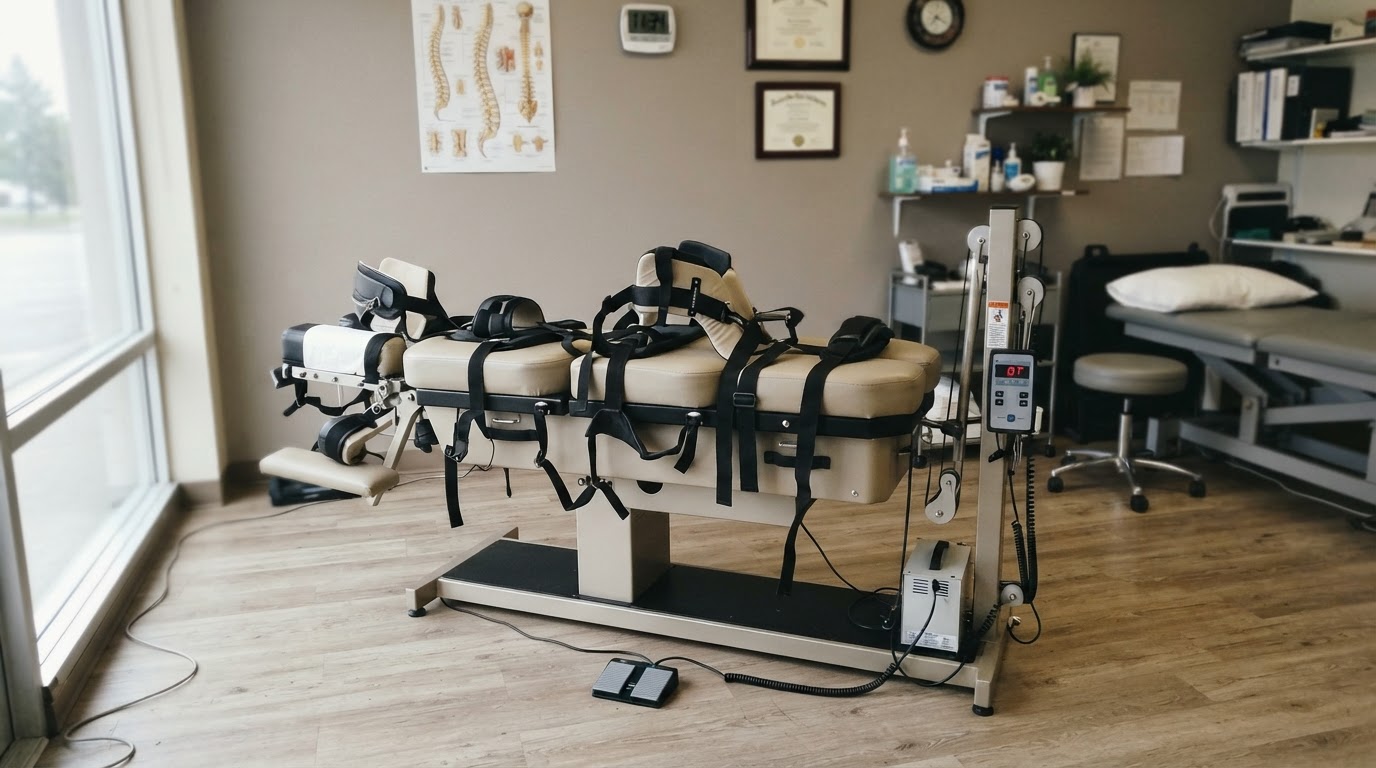
cox technic flexion distraction spinal decompression table in Windsor clinic suite
If you have been told that back surgery is your only option, it is worth knowing there is a gentler path to try first. Spinal decompression is a calm, hands-on table treatment that has helped many of our Windsor patients avoid the operating room entirely. At Active Chiropractic on Tecumseh Road East, Dr. Annunciato Angelini has used certified Cox Technic flexion-distraction decompression for over two decades to relieve herniated discs, sciatica, and chronic lower back pain without cracking, twisting, or surgery. In this guide, we explain exactly what spinal decompression is, how it works inside your spine, who it helps most, and what a real treatment plan looks like, so you can decide whether it is the right next step for your back.
So what actually happens during a spinal decompression session?
You lie face down on a specialized motorized table designed specifically for spinal decompression. The table slowly and gently stretches your lower back (or your neck, depending on where the problem is) in a controlled, rhythmic motion. There is no cracking, no sudden twisting, and no pain. Most people relax so completely during a session that they nearly fall asleep on the table. A typical treatment lasts about 12 to 15 minutes, and many patients feel a sense of relief and lightness almost immediately afterward.
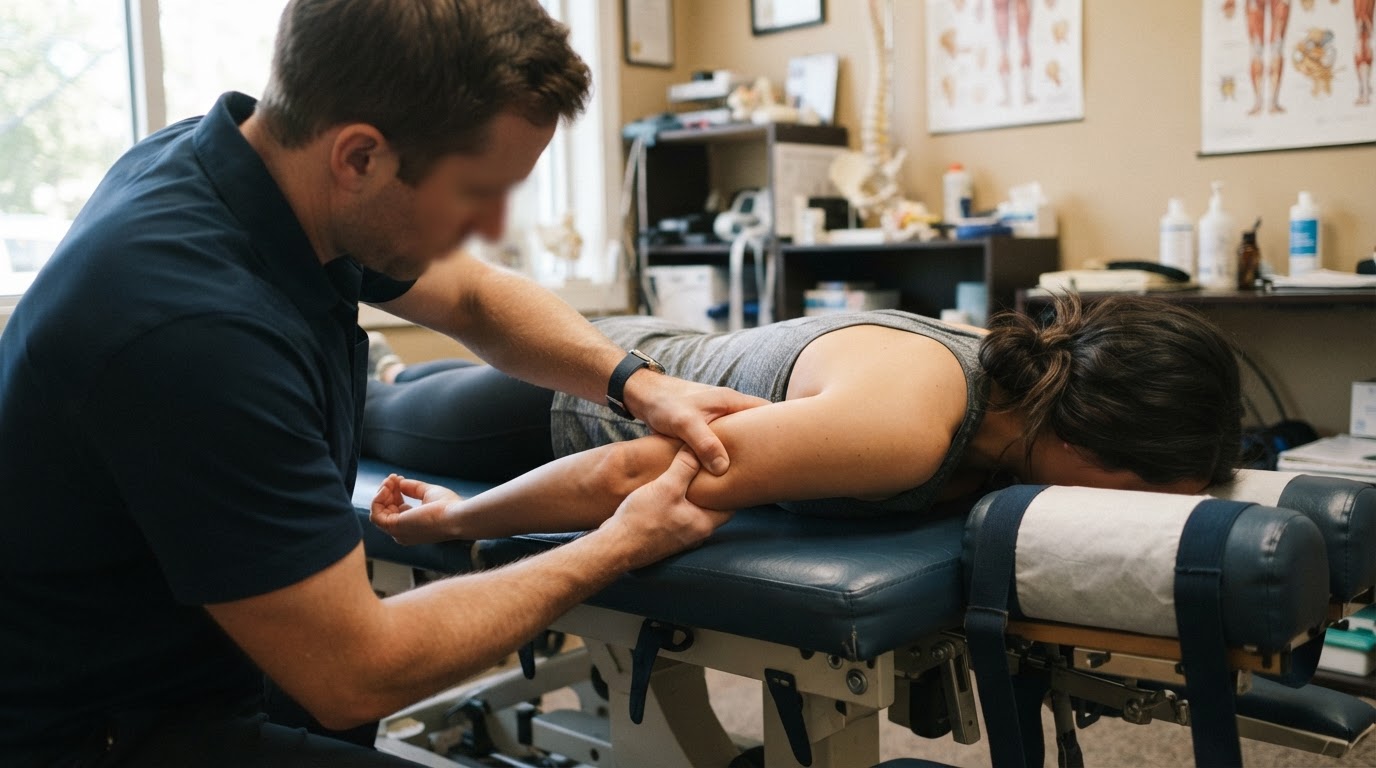
During the treatment, Dr. Angelini stays right at the table with you. He places his hands on the specific spinal segment that is injured, guiding the table's motion so the stretch lands precisely where the disc is bulging or the nerve is pinched. This is not a one-size-fits-all machine pulling on your whole body. It is a targeted, doctor-controlled decompression of the exact level that needs help, which is one of the reasons Cox Technic is so much more effective than generic traction devices.
Why does it work? The science of negative pressure
To understand why decompression works, it helps to picture what is happening inside your spine. Between each pair of vertebrae sits an intervertebral disc, a tough, fibrous shock absorber with a soft, gel-like center called the nucleus pulposus. When a disc herniates, that soft center pushes outward through a tear in the outer ring and presses against a nearby spinal nerve. That pressure on the nerve is what creates the shooting leg pain we call sciatica, along with numbness, weakness, and burning.
Spinal decompression gently opens up the space between the vertebrae. This does two critical things at once. First, it takes the physical pressure off the pinched nerve, giving it room to breathe and reducing inflammation. Second, and just as importantly, it creates a negative pressure, a kind of vacuum, inside the disc itself. That vacuum effect can actually draw the herniated gel material back toward the center of the disc where it belongs, away from the nerve. It also pulls water, oxygen, and healing nutrients into the disc, which is important because adult discs do not have a direct blood supply and rely on this fluid movement to heal.
Who is spinal decompression for?
Decompression is not for every back problem, but it is remarkably effective for a specific group of conditions. We use it most often for patients dealing with:
Herniated or bulging lumbar and cervical discs that are pressing on a nerve root
Sciatica, the sharp, shooting pain that travels from the lower back down through the buttock and leg
Spinal stenosis, a narrowing of the spinal canal that causes leg pain, cramping, and weakness when walking
Chronic lower back pain that has not responded to stretching, exercise, medication, or standard chiropractic care
Degenerative disc disease, where discs have thinned and lost their cushioning over time
Facet syndrome, where the small joints at the back of the spine become irritated and inflamed
It is also an excellent option for patients who have already had back surgery and are still in pain, or who want to avoid a second surgery. Because the technique is so gentle and involves no forceful thrusting, it can often be used safely even when the spine is more fragile than usual. That said, there are certain cases, such as severe instability, spinal fractures, or specific tumors, where decompression is not appropriate, which is why we always begin with a thorough examination before recommending any treatment.
How decompression compares to surgery and injections
When a disc herniation is causing severe sciatica, patients are often presented with three conventional options: prescription pain medication, epidural steroid injections, or surgery (typically a microdiscectomy or spinal fusion). Each of these has real drawbacks. Medication only masks the pain without fixing the underlying mechanical problem. Injections deliver steroids near the nerve to reduce inflammation, but the relief is often temporary and repeated injections carry their own risks. Surgery can remove the bulging disc fragment, but it does not address the underlying disc damage that caused the herniation in the first place, and a meaningful percentage of back surgeries result in what is known as Failed Back Surgery Syndrome, where pain persists or returns within a few years.
Spinal decompression takes a different approach. Instead of cutting away the symptom or chemically suppressing the inflammation, it works to restore the disc's normal mechanics and give the nerve the space it needs to heal naturally. Clinical research on Cox Technic has shown strong outcomes for disc herniations and sciatica, with the majority of patients experiencing significant relief without ever needing surgery. Because it preserves the disc and surrounding tissue rather than removing them, there is no permanent structural change to your spine.
I have watched patients walk in barely able to stand up straight and walk out smiling after a few weeks of decompression. It is one of the most rewarding tools in the entire clinic, because it gives people their life back without the risks and recovery time of surgery.
Is spinal decompression safe?
Yes. Cox Technic flexion-distraction is one of the most researched and gentle techniques in all of chiropractic care. It was developed specifically as a safe, conservative alternative to surgery for disc problems, and it has been studied in federally funded biomechanical trials. There is no high-velocity cracking or rotational twisting of the spine, which makes it appropriate even for patients who are nervous about traditional adjustments or who have been told they are not candidates for forceful manipulation.
Safety also comes from the assessment that happens before any treatment begins. At your first visit, Dr. Angelini reviews your history, performs a neurological and orthopedic examination, and uses computerized nerve scanning to map exactly where the stress is in your spine. If your case requires imaging or a surgical consultation, we will refer you appropriately. Decompression is only recommended when the examination confirms it is the right fit for your body and your specific condition.
What a typical treatment plan looks like
Every plan is individualized, but a common decompression protocol for a lumbar disc herniation runs over four to six weeks. Most patients begin with two to three sessions per week, tapering down as they improve. Each visit includes the decompression treatment itself along with supportive care such as gentle spinal alignment, soft-tissue work to release the muscle spasms that protect the injured area, and specific home exercises to stabilize the spine as it heals.
One of the things patients appreciate most is that progress is measurable, not just felt. We re-scan your nervous system periodically throughout the plan, so you can actually see the tension in your spine decreasing visit by visit. This turns 'I think I feel a little better' into 'here is the proof my body is healing,' which is incredibly motivating, especially for patients who have been in pain for months or years and had started to lose hope.
What you can do at home to support your recovery
Decompression does most of its work on the table, but what you do between visits matters a lot. Sitting is the single biggest enemy of a healing disc, because sitting, especially slouched sitting, spikes the pressure inside your lumbar discs far higher than standing or walking. During your treatment plan, we coach you to break up long sitting stretches, use a supportive chair, and avoid heavy lifting and forward bending with a rounded back. We also teach you a simple resting position, lying on your back with your lower legs elevated on a chair, that takes the compressive load off your lower back and gives the disc room to rehydrate.
Hydration plays a role too. Discs are largely water, and a well-hydrated disc is a more resilient disc. Drinking enough water throughout your treatment plan supports the fluid imbibition that decompression encourages. We also address sleep posture, because the position you spend a third of your life in either helps or harms your healing spine every single night.
Most patients feel real, noticeable relief within 4 to 6 sessions. We measure your progress each visit with computerized nerve scanning so you can actually see the improvement, not just feel it. If you have been told surgery is your only option, decompression is a calm, proven step worth trying first.
The takeaway
If surgery has been mentioned but you are not ready, spinal decompression is a calm, proven, non-surgical step worth trying first. By gently opening the disc space, drawing the herniation back toward center, and giving the pinched nerve room to heal, Cox Technic has helped countless Windsor patients avoid the operating room and return to the activities they love.
Related Care & Clinic Guides
Explore how our team supports patients recovering from these specific conditions in Windsor:

 Soft Tissue & Sports