Piriformis Syndrome: When Deep Buttock Pain Mimics a Herniated Disc and Sciatica
D
Dr. Annunciato Angelini
Lead Chiropractor, Certified ART Provider (23+ Years)
|May 10, 2024 10 min read
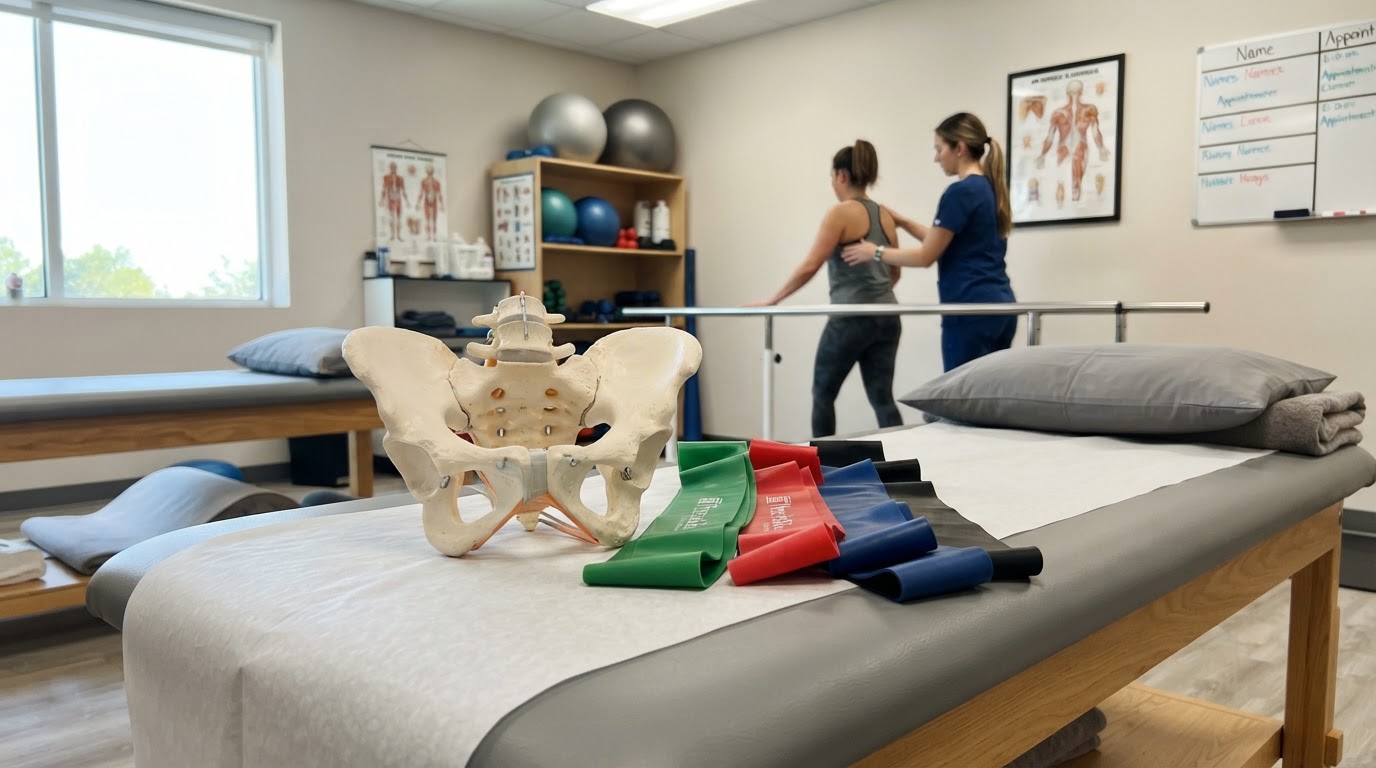
piriformis syndrome pelvis anatomy model and deep hip gluteal rehabilitation bands
Do you experience an agonizing, deep ache right in the center of your buttock cheek that worsens dramatically whenever you sit in your car, sit at your desk chair, or climb stairs? Does that deep ache send tingling, burning sensations, or dull numbness radiating down the back of your hamstring toward your knee? Many patients who present to our Windsor clinic with these symptoms arrive convinced that they have a serious lumbar disc herniation requiring surgery. Yet, when their lumbar spine is examined, the lower back itself feels remarkably pain-free. In many of these cases, the true anatomical culprit is Piriformis Syndrome—a condition where a deep, hypertonic hip rotator muscle compresses and strangles the sciatic nerve. At Active Chiropractic in Windsor, Dr. Annunciato Angelini utilizes certified Active Release Techniques (ART) and precision pelvic biomechanical alignment to release the trapped sciatic nerve and deliver rapid, lasting relief.
Anatomy of the Piriformis Muscle and Its Intimate Relationship with the Sciatic Nerve
The piriformis is a flat, pyramid-shaped muscle positioned deep within the gluteal region, completely buried beneath the large gluteus maximus muscle. It originates on the front surface of the sacrum (the triangular bone at the base of your spine between your hip bones) and travels diagonally across the pelvis to insert onto the upper border of the greater trochanter of your femur (thigh bone). Functionally, the piriformis serves as an external rotator and abductor of the hip joint when your leg is straight, and helps stabilize the sacroiliac (SI) joint during walking and running.
What makes the piriformis clinically famous, however, is its intimate anatomical proximity to the massive sciatic nerve. The sciatic nerve exits the pelvic interior through the greater sciatic notch and, in approximately 85% to 90% of the population, passes directly underneath the belly of the piriformis muscle. In about 10% to 15% of individuals, congenital anatomical variations exist where the sciatic nerve pierces directly through the muscle belly or splits around it. When the piriformis becomes inflamed, swollen, shortened, or locked in chronic myofascial spasm, it exerts direct mechanical pressure on the sciatic nerve—acting like a tightened tourniquet that compromises neural microcirculation.
What Triggers Piriformis Spasm? Sitting, Running, and Pelvic Misalignment
In Windsor's population, piriformis syndrome is frequently driven by two contrasting lifestyles: the prolonged sedentary desk/driving posture, and repetitive endurance running or athletic training.
Prolonged Prolonged Sitting & 'Wallet Sciatica': Sitting for 8 to 10 hours a day compresses the piriformis against the hard ischial tuberosity bone, inducing tissue hypoxia and scar tissue formation. Men who sit with a thick wallet in their back pocket create a significant pelvic tilt that violently jams the piriformis directly into the sciatic nerve.
Sacroiliac (SI) Joint Subluxation: If one of your sacroiliac joints becomes misaligned or restricted, the sacrum rotates abnormally. Because the piriformis originates directly on the sacrum, it is pulled into constant eccentric tension and protective spasm.
Gluteal Amnesia & Weak Hip Abductors: When the gluteus medius and maximus become weak and inhibited from sitting, the small piriformis is forced to work overtime to stabilize the pelvis during every walking stride, quickly becoming hypertrophied, exhausted, and fibrotic.
Overuse in Runners and Cyclists: Repetitive hip flexion and extension on uneven roads or improper footwear overloads the external rotators, building dense adhesions between the muscle and the nerve sheath.
Piriformis Syndrome vs. Lumbar Disc Herniation: How to Accurately Distinguish Between Them
Because both conditions involve sciatic nerve irritation, accurate differential diagnosis is paramount for effective treatment:
Location of Primary Pain: Lumbar disc herniations typically cause localized lower back pain that radiates past the knee into the calf and foot. Piriformis syndrome centers on a focal, tender trigger point deep in the buttock, with pain often stopping at the knee.
Coughing and Sneezing: In lumbar disc herniations, coughing, sneezing, or straining on the toilet (Valsalva maneuver) dramatically spikes intradiscal pressure, sending electric shocks down the leg. In piriformis syndrome, coughing causes no change in leg symptoms.
Sitting Tolerance: Sitting on hard chairs is excruciating in piriformis syndrome because the chair directly presses against the inflamed muscle. Lumbar disc patients dislike sitting because of flexion load on the disc, but soft seating is often equally provocative.
Orthopedic Tests: The FAIR test (Flexion, Adduction, Internal Rotation of the hip) vigorously stretches the piriformis and reliably reproduces symptoms in piriformis syndrome, while a straight-leg raise test is often negative until 60-70 degrees of elevation.
Over my 23 years treating patients in Windsor, I've had numerous patients scheduled for spinal surgery whose pain was completely resolved after 4 to 6 sessions of Active Release Techniques applied directly to the piriformis and sciatic nerve.
The Clinical Solution: Certified Active Release Techniques (ART) and Pelvic Balancing
Standard stretching alone rarely fixes piriformis syndrome. In fact, aggressively stretching an inflamed piriformis muscle frequently compresses the entrapped sciatic nerve even harder against the pelvis, worsening the patient's pain. Foam rolling can similarly bruise the already irritated nerve trunk.
At Active Chiropractic, Dr. Annunciato Angelini uses certified Active Release Techniques (ART) to directly break the adhesions gluing the sciatic nerve to the deep muscular border of the piriformis. Dr. Angelini places a specific manual contact along the shortened piriformis muscle, anchoring the tissue while the patient actively lengthens the muscle through hip internal rotation. This shearing motion cleaves the scar tissue away from the nerve sheath, restoring normal neural sliding.
Simultaneously, Dr. Angelini evaluates and adjusts the sacroiliac joints, lumbar spine, and pelvis to eliminate structural pelvic torsion. We integrate computer nerve scans, targeted gluteus medius strengthening exercises, and gait analysis to ensure the pelvis remains stable and balanced.
Never sit with a wallet, phone, or keys in your back pocket. Remove them completely before sitting at your desk or getting behind the wheel of your vehicle to avoid asymmetric pelvic torsion.
The takeaway
Piriformis syndrome is a common, frequently misdiagnosed cause of deep buttock pain and sciatica. By breaking down muscular adhesions with Active Release Techniques and restoring pelvic alignment, you can permanently free the trapped sciatic nerve without drugs or surgery.
Related Care & Clinic Guides
Explore how our team supports patients recovering from these specific conditions in Windsor:

 Soft Tissue & Sports