What Is Whiplash? Part 2: Symptoms, Quebec Task Force Grades, and Complete Chiropractic Recovery in Windsor
D
Dr. Annunciato Angelini
Lead Chiropractor, Whiplash Rehabilitation Specialist (23+ Years)
|July 12, 2024 10 min read
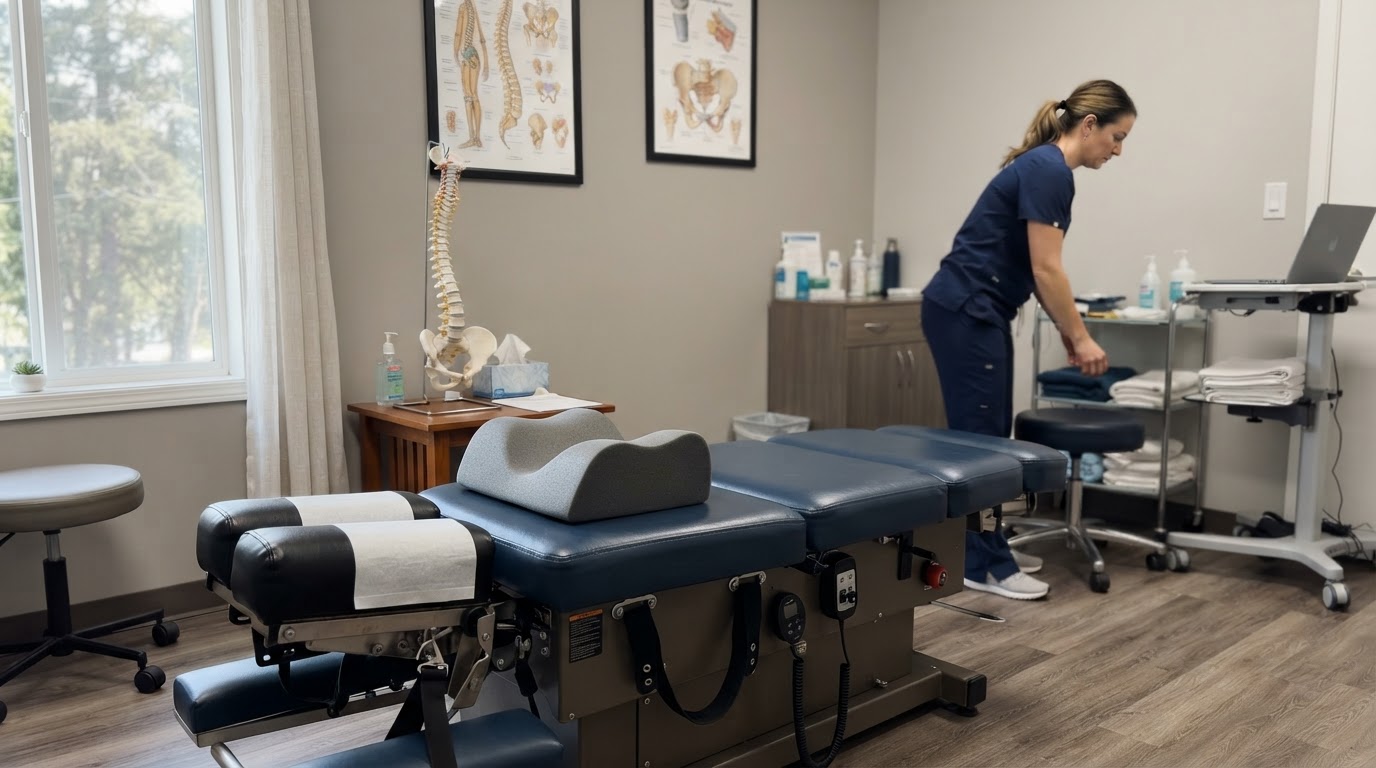
whiplash associated disorders WAD active rehabilitation and gentle cervical adjustment table
In Part 1 of our clinical whiplash guide, we examined the rapid 100-millisecond biomechanics of rear-end collisions, why low-speed impacts cause severe hidden soft-tissue trauma, and why negative hospital X-rays often create a dangerous false sense of security. Now, in Part 2, we turn to the clinical evaluation, staging, and evidence-based rehabilitation of Whiplash Associated Disorders (WAD). If you have been involved in a motor vehicle collision in Windsor, Tecumseh, LaSalle, or Essex County, understanding how whiplash is formally classified under Ontario auto insurance guidelines and receiving early, active chiropractic care is the difference between achieving full, permanent recovery or suffering from chronic, lifelong pain and disability.
The Quebec Task Force Classification: Staging Whiplash Associated Disorders (WAD)
In Canada, whiplash injuries are formally classified using the Quebec Task Force on Whiplash-Associated Disorders (QTF-WAD) grading scale—the standard recognized by the Financial Services Regulatory Authority of Ontario (FSRA) and all auto insurance carriers:
WAD Grade 0: No neck complaints, zero pain, and no physical signs of musculoskeletal injury.
WAD Grade 1: Neck pain, stiffness, or tenderness reported by the patient, but with completely normal range of motion and no physical signs on physical examination.
WAD Grade 2: Neck pain accompanied by musculoskeletal physical signs, including significantly restricted cervical range of motion, muscle spasm, and point tenderness over facet joints or ligaments.
WAD Grade 3: Neck pain accompanied by neurological signs, including diminished deep tendon reflexes, dermatomal sensory numbness/tingling, or focal muscle weakness in the upper extremities (radiculopathy).
WAD Grade 4: Severe cervical spine trauma involving bony fracture or complete joint dislocation requiring immediate neurosurgical or orthopedic intervention.
The Critical Concussion & Whiplash Overlap: Cervicocranial Syndrome
A crucial clinical reality that is frequently missed in motor vehicle accident victims is the direct overlap between whiplash and mild traumatic brain injury (concussion). Biomechanical studies demonstrate that any cervical impact forceful enough to cause a whiplash injury (requiring approximately 4.5G of acceleration) is also forceful enough to induce a concussion (which occurs at approximately 60G to 90G of angular rotational acceleration of the brain tissue inside the cranium).
Patients frequently present with a complex cluster of symptoms known clinically as Cervicocranial Syndrome: severe cervicogenic tension headaches starting at the base of the skull, dizziness, brain fog, difficulty concentrating, memory lapses, hypersensitivity to light and noise, visual tracking fatigue, and emotional irritability. Differentiating between upper cervical joint mechanoreceptor dysfunction and central vestibular concussive injury requires a comprehensive clinical evaluation.
Why Immobilizing Your Neck in a Soft Foam Collar Is Dangerous
Years ago, the standard medical response to a car crash was to put the patient in a soft cervical foam collar for four to six weeks and tell them to stay in bed. Today, every major clinical practice guideline in orthopedic medicine warns strongly against prolonged immobilization.
Cervical soft tissues and spinal discs require controlled movement to heal. Immobilizing an injured neck for weeks causes rapid muscle atrophy in deep cervical flexors (longus colli and capitis), promotes dense, disorganized, cross-linked scar tissue adhesions that permanently restrict joint range of motion, and alters central nervous system neuroplasticity, paving the way for Chronic Pain Syndrome. Early, gentle, active mobilization under professional chiropractic guidance is the gold standard for full functional recovery.
The old advice to 'put on a foam collar and wait it out' turned acute whiplash into permanent chronic pain. Today, active gentle chiropractic care, soft-tissue therapy, and progressive movement ensure tissues heal strong, supple, and pain-free.
The Active Recovery Protocol at Active Chiropractic in Windsor
At Active Chiropractic, Dr. Annunciato Angelini implements an evidence-based, four-phase clinical recovery protocol for motor vehicle accident patients:
Phase 1: Acute Pain Modulation & Inflammation Control (Weeks 1-2): Gentle low-force cervical and thoracic joint mobilization to inhibit nociception without stressing torn ligaments; light ice therapy; computerized nerve scans to baseline neuromuscular trauma.
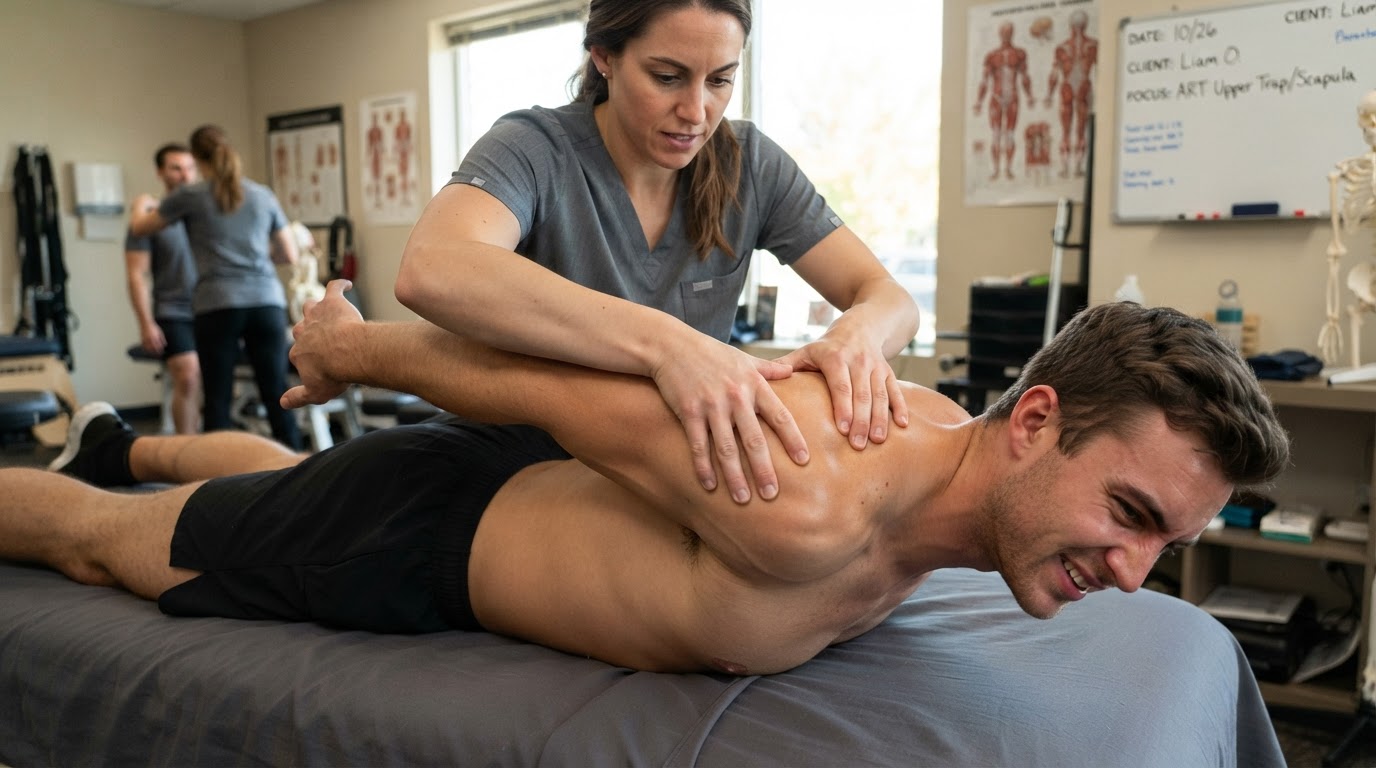
Phase 2: Soft Tissue Adhesion Cleavage with Active Release Techniques (ART) (Weeks 3-6): Releasing dense fibrotic scar tissue from the sternocleidomastoid (SCM), scalenes, levator scapulae, suboccipitals, and upper trapezius muscles.
Phase 3: Restoring Full Physiological Joint Mobility (Weeks 6-8): Gentle chiropractic spinal adjustments to eliminate subluxations and restore symmetrical rotation and flexion-extension curves.
Phase 4: Deep Cervical Stabilizer Rehabilitation & Posture Integration: Retraining the deep longus colli flexor muscles using pressure biofeedback, strengthening the scapular retractors, and restoring normal cervical lordosis.
Ontario Auto Insurance (MVA) Direct Billing: Zero Out-of-Pocket Stress
In Ontario, anyone injured in an auto collision is entitled to Statutory Accident Benefits (SABS) through their auto insurance policy, regardless of who was at fault in the accident. At Active Chiropractic in Windsor, we handle all the documentation, submit your OCF-18 treatment plans directly through HCAI (Health Claims for Auto Insurance), and provide direct billing to your insurance carrier so you have zero out-of-pocket costs and can focus 100% of your energy on healing.
Report your auto accident to your insurance company within 7 days of the collision, and schedule your chiropractic examination promptly. Ontario auto insurance requires claim paperwork to be initiated early to access the Minor Injury Guideline (MIG) or non-MIG benefit streams.
The takeaway
Whiplash is a serious multi-phase soft-tissue and neurological injury that requires prompt, active care. Through gentle chiropractic adjustments, Active Release Techniques, and direct Ontario auto insurance billing, you can recover fully and protect your spine for life.
Related Care & Clinic Guides
Explore how our team supports patients recovering from these specific conditions in Windsor:
 Soft Tissue & Sports