Thumb and Wrist Pain (De Quervain's Tenosynovitis): Causes, Finkelstein's Test, and Non-Surgical Healing
D
Dr. Annunciato Angelini
Lead Chiropractor, Certified ART Provider (23+ Years)
|June 7, 2024 9 min read
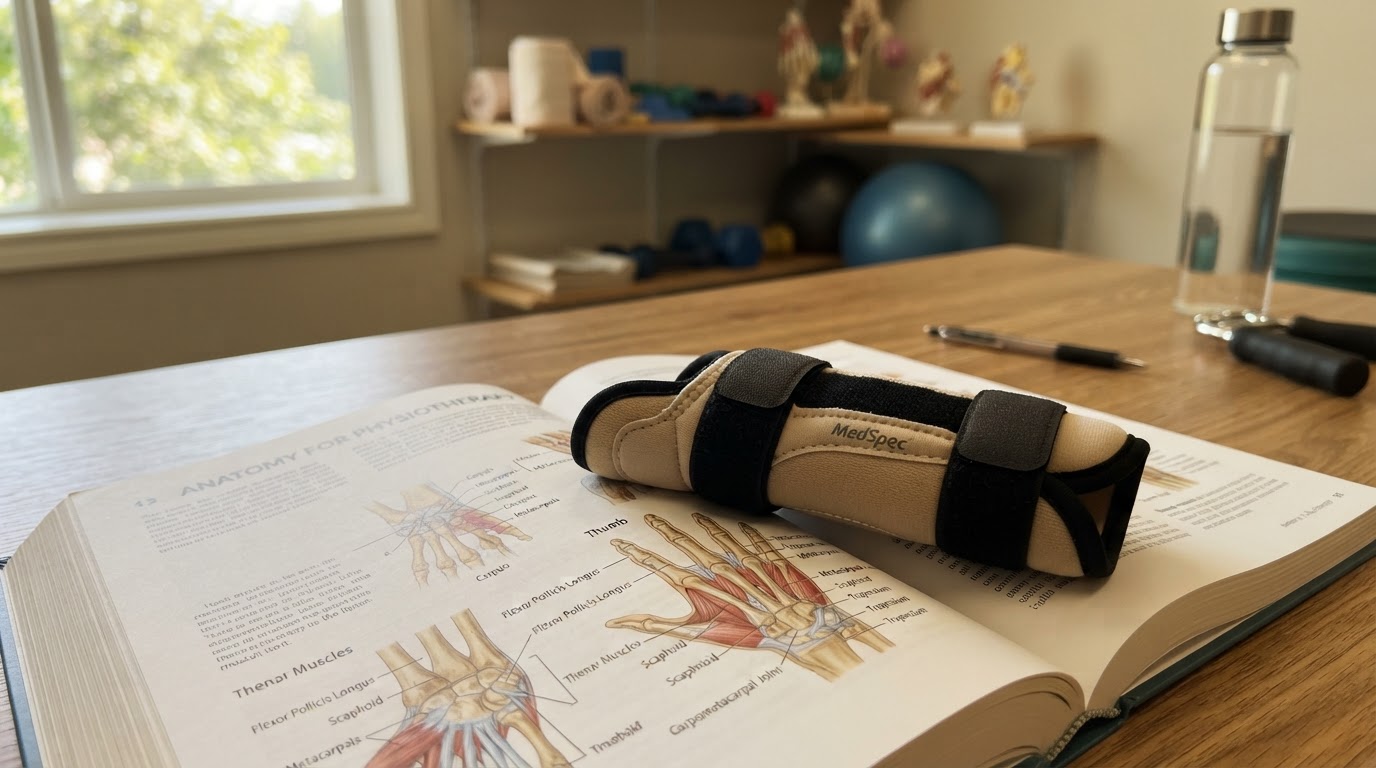
de quervains tenosynovitis thumb pain wrist support splint and hand anatomy reference
Does picking up your newborn baby, turning a round doorknob, opening a jar, or texting on your smartphone send a sharp, knife-like pain shooting along the base of your thumb and into your wrist? Does your wrist pop, squeak, or feel like it has wet sand grinding inside whenever you move your thumb? If so, you are likely suffering from De Quervain's Tenosynovitis—one of the most acutely painful and disabling repetitive strain injuries of the hand and wrist. Frequently nicknamed 'Mother's Thumb,' 'Texting Thumb,' or 'Gamer's Wrist,' this condition affects new parents, healthcare workers, tradespeople, office professionals, and athletes throughout Windsor and Essex County. At Active Chiropractic on Tecumseh Road East in Windsor, Dr. Annunciato Angelini provides specialized, non-invasive protocols using certified Active Release Techniques (ART), carpal bone mobilization, and tendon rehabilitation to permanently resolve De Quervain's tenosynovitis without steroid injections or surgery.
Anatomy of the First Dorsal Compartment: What Is De Quervain's Tenosynovitis?
To understand De Quervain's tenosynovitis, we must look at the first dorsal extensor compartment of the wrist—a tiny, unyielding fibrous tunnel located right over the bony styloid process of the radius on the thumb-side of your wrist. Passing through this narrow tunnel are two dedicated thumb tendons: the Abductor Pollicis Longus (APL), which pulls your thumb outward away from your hand, and the Extensor Pollicis Brevis (EPB), which straightens the thumb.
Both tendons are encased in a slippery, double-layered synovial sheath lubricated by fluid that permits thousands of effortless thumb movements each day. However, when the wrist is repeatedly subjected to combined thumb abduction and ulnar deviation (tilting the wrist toward the pinky finger while gripping or pinching), the tendons repeatedly rub and grind against the rigid fibrous roof of the tunnel. This mechanical friction creates micro-tearing, painful inflammation, and thickens the synovial sheath by up to four times its normal volume. As the swollen sheath expands inside the unyielding tunnel, the tendons become choked and strangulated, producing intense stabbing pain with every thumb movement.
Who Is at Risk? The Classic Triggers of De Quervain's
New Mothers and Caregivers ('Mommy's Thumb'): Lifting a newborn infant under the armpits with thumbs spread wide and wrists bent in extreme ulnar deviation places immense eccentric friction on the APL and EPB tendons. Postpartum hormonal fluctuations (relaxin and estrogen shifts) also increase tendon sheath laxity and fluid retention.
Smartphones and Gaming ('Texting Thumb'): Constant rapid thumb scrolling, tapping, and typing on oversized smartphones overworks the extensor pollicis brevis muscle.
Tool and Die, Construction, and Assembly Workers in Windsor: Repetitive use of pliers, screwdrivers, pneumatic nail guns, and manual equipment requiring forceful pinch grips.
Racquet Sports, Golfers, and Musicians: Gripping golf clubs, tennis racquets, or playing piano and guitar with wrists locked in deviation.
The Finkelstein's Test: The Definitive Clinical Assessment
Doctors and chiropractors use a classic orthopedic examination maneuver called Finkelstein's Test (and its modern refinement, the Eichhoff's maneuver) to definitively identify De Quervain's tenosynovitis:
To perform the test, you tuck your thumb inside your palm, curl your other four fingers tightly over the thumb to make a closed fist, and then gently bend your entire wrist downward toward your little finger (ulnar deviation). If you have De Quervain's, this movement aggressively stretches the inflamed APL and EPB tendons through the narrowed first dorsal compartment, eliciting an unmistakable, excruciating jolt of sharp pain directly over the radial styloid bump. A visible or palpable crepitus (grating sensation) can often be felt as the swollen tendons struggle to glide.
Cortisone injections into the first dorsal compartment can provide temporary relief, but they carry risks of subcutaneous fat necrosis, skin depigmentation, and permanent tendon thinning. Active Release Techniques directly breaks down the adhesions without damaging tendon tissue.
Why Immobilization Splints Alone Frequently Fail
The conventional medical response to De Quervain's is to prescribe a rigid thumb spica splint for 4 to 8 weeks. While resting an acutely inflamed tendon is helpful for the first few days, prolonged immobilization has serious drawbacks. Tendons require controlled mechanical tension to heal with organized, elastic collagen fibers. Complete immobilization leads to muscle atrophy in the forearm, joint stiffness in the scaphoid and radius, and promotes dense, disorganized cross-linked scar tissue that glues the tendon sheath permanently to the surrounding fascia. The moment the patient removes the splint and attempts to lift their child or return to work, the adhesions are immediately re-torn and the excruciating pain returns.
The Clinical Solution: Active Release Techniques (ART) and Carpal Mobilization
At Active Chiropractic in Windsor, Dr. Annunciato Angelini provides a proven, non-surgical protocol that addresses both the local tendon pathology and the full biomechanical chain:
Active Release Techniques (ART): Precise hands-on tension applied to the abductor pollicis longus and extensor pollicis brevis muscle bellies in the mid-forearm, while the patient actively lengthens the thumb and wrist. This breaks down the internal scar tissue adhesions and restores smooth tendon glide through the first dorsal compartment.
Radial Styloid & Carpal Joint Mobilization: Gentle adjustment and mobilization of the scaphoid, trapezium, and radial styloid bones to ensure the wrist carpal arch is perfectly aligned.
Cervical Spine Check (C6 Nerve Root): Checking the C6 nerve root in the neck to eliminate any 'double crush' irritation that impairs neural tone to the thumb extensors.
Progressive Eccentric Tendon Loading: Guiding the patient through controlled eccentric strengthening exercises that stimulate tenocytes to regenerate healthy, robust collagen fibers.
Ergonomic Lifting Technique Coaching: Teaching parents how to lift their infant by scooping under the buttocks and chest with open flat palms rather than pinching with wide-spread thumbs.
When lifting your infant or heavy objects, keep your thumbs tucked tightly against your index fingers (like a mitten) and scoop with your whole forearms, rather than spreading your thumbs wide like an open 'L'.
The takeaway
De Quervain's Tenosynovitis causes debilitating thumb and wrist pain that rarely resolves with resting splints alone. Certified Active Release Techniques and chiropractic carpal mobilization break down tendon adhesions and deliver rapid, long-lasting healing.
Related Care & Clinic Guides
Explore how our team supports patients recovering from these specific conditions in Windsor:

 Soft Tissue & Sports