Thoracic Outlet Syndrome (TOS): Symptoms, Entrapment Sites, and Non-Surgical Treatment in Windsor
D
Dr. Annunciato Angelini
Lead Chiropractor, Certified ART Provider (23+ Years)
|May 31, 2024 10 min read
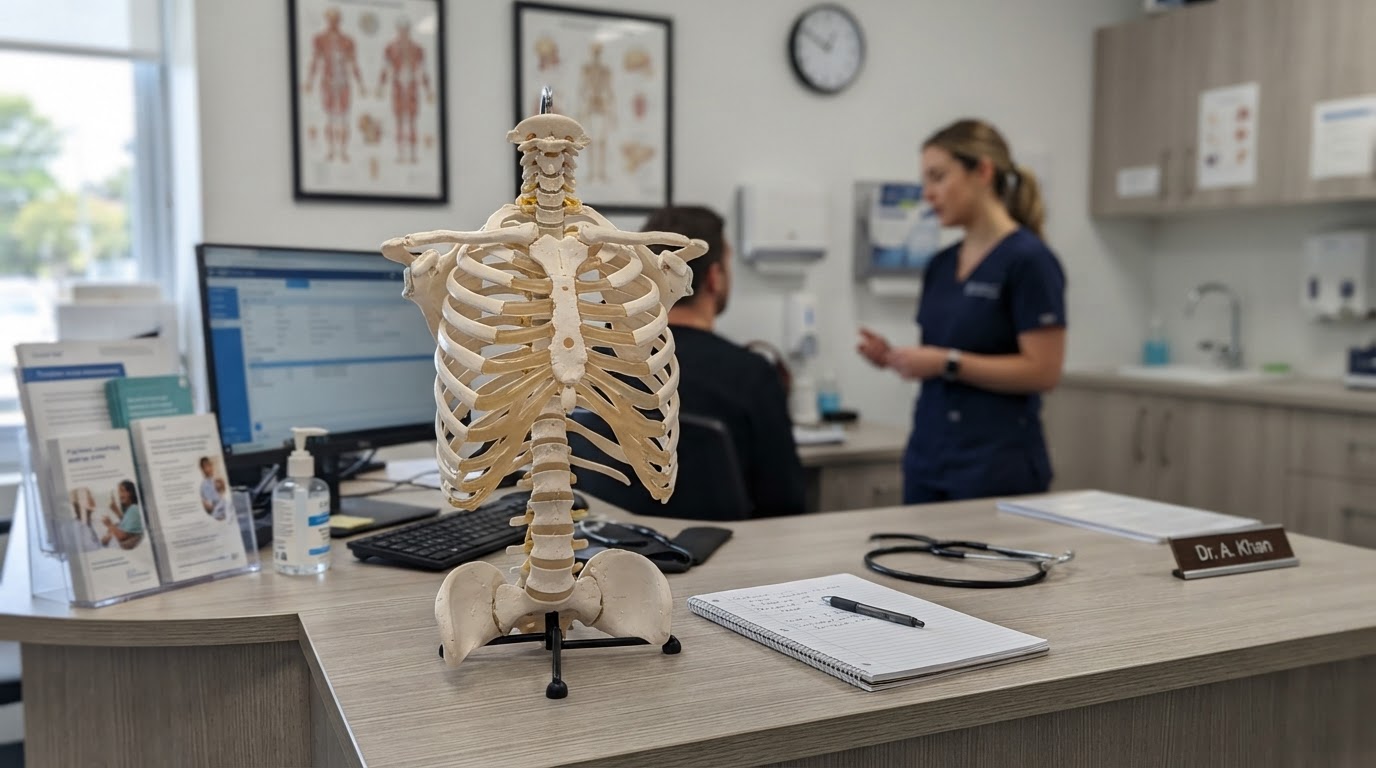
thoracic outlet syndrome TOS upper thoracic rib cage model for neurovascular relief
Do your hands and arms go numb, tingle, or feel completely drained of blood whenever you dry your hair with a blow-dryer, paint an overhead ceiling, drive your car with your hands high on the steering wheel, or type on your laptop? Does your arm feel heavy, cold, and ache with a deep, diffuse soreness that spreads from your collarbone down into your ring and pinky fingers? Many patients suffering from these symptoms bounce between neurologists, orthopedic surgeons, and cardiologists, undergoing repetitive MRIs and nerve conduction studies that return 'normal' or 'inconclusive.' In reality, these classic symptoms point directly to Thoracic Outlet Syndrome (TOS)—a challenging neurovascular compression disorder where nerves and blood vessels traveling from the neck into the arm become compressed within narrow anatomical choke points between the neck and chest. At Active Chiropractic in Windsor, Dr. Annunciato Angelini utilizes certified Active Release Techniques (ART), first rib mobilization, and postural realignment to relieve thoracic outlet compression without dangerous surgical rib resections.
Anatomy of the Thoracic Outlet: The Vital Neurovascular Highway
The thoracic outlet is an intricate anatomical corridor located at the base of your neck and the top of your chest, just behind and beneath your collarbone (clavicle). Traversing this narrow corridor is a massive bundle of critical neurological and vascular structures: the brachial plexus (a complex nerve network formed by cervical nerve roots C5 through T1 that supplies all motor and sensory function to your arm and hand), the subclavian artery (the high-pressure arterial conduit delivering oxygenated blood to the upper extremity), and the subclavian vein (returning deoxygenated blood to the heart).
Because the human arm is suspended entirely by muscles, tendons, and the single small sternoclavicular joint, the space inside the thoracic outlet changes dynamically with every shoulder movement. When poor posture, muscle hypertrophy, fibrotic scar tissue, or anatomical anomalies narrow this space, the delicate nerves and vessels are mechanically crushed against hard bony structures.
The Three Critical Entrapment Bottlenecks in Thoracic Outlet Syndrome
Clinically, Thoracic Outlet Syndrome can occur at one, two, or all three of the following distinct anatomical choke points:
The Interscalene Triangle: Bounded by the anterior scalene muscle in front, the middle scalene muscle behind, and the first rib below. This tight triangular tent accommodates the brachial plexus and the subclavian artery. Spastic, hypertrophied, or fibrotic scalene muscles act like a clamped vice on the C8-T1 lower trunk of the brachial plexus.
The Costoclavicular Space: The narrow gap formed between the underside of the clavicle (collarbone) above and the top surface of the first thoracic rib below. When the first rib is elevated or subluxated, or when the shoulders roll forward in a slouched posture, this gap closes like a pair of scissors, crushing both nerves and blood vessels.
The Subcoracoid / Pectoralis Minor Space: Located beneath the coracoid process of the scapula, under the tight belly and tendon of the pectoralis minor muscle. When you raise your arm overhead, the neurovascular bundle is stretched across the tendon, generating severe numbness and arterial cutoff.
Neurogenic vs. Vascular TOS: Recognizing Your Exact Symptoms
Over 90% of TOS cases are Neurogenic Thoracic Outlet Syndrome (nTOS), resulting from compression of the brachial plexus nerves. Symptoms include numbness, tingling, and aching along the inner forearm, little finger, and ring finger (the ulnar nerve distribution); weakness of fine motor skills (such as typing, holding a pen, or buttoning shirts); and a deep, gnawing pain in the neck, trapezius, and shoulder.
Vascular TOS occurs when the subclavian artery or vein is compressed. Arterial compression causes the hand to become noticeably pale, cold to the touch, and fatigued after mild exertion, accompanied by a diminished radial pulse when the arm is elevated (positive Adson's or Wright's test). Venous compression causes the arm and hand to feel swollen, congested, heavy, and display a bluish or purplish discoloration with prominent distended veins.
Surgical resection of the first rib is an invasive, high-risk procedure with mixed long-term success. Over 23 years in Windsor, I have seen conservative chiropractic mobilization of the first rib combined with Active Release of the scalenes completely resolve thoracic outlet syndrome without surgery.
What Causes TOS? Slouched Posture, Repetitive Motion, and Whiplash
Forward Head & Rounded Shoulder Posture ('Upper Crossed Syndrome'): Slumping forward at a computer workstation flattens the thoracic curve, depresses the clavicles, and tightens the pectoralis minor and scalene muscles.
Elevated First Rib Subluxation: The first rib should glide down during inhalation and shoulder motion. Stress, shallow paradoxical chest breathing, or coughing spells can cause the scalene muscles to lock the first rib in an elevated position.
Repetitive Overhead Work and Sports: Electricians, auto assembly workers, painters, swimmers, volleyball players, and baseball pitchers repeatedly stretch the neurovascular bundle under the pectoralis minor.
Whiplash Trauma: Rear-end motor vehicle collisions violently stretch and tear the scalene muscles, leaving behind dense collagenous scar tissue that adheres directly to the brachial plexus nerve sheaths.
The Chiropractic Solution: Multimodal Care at Active Chiropractic in Windsor
At Active Chiropractic, Dr. Annunciato Angelini resolves Thoracic Outlet Syndrome by systematically decompressing every choke point:
Gentle First Rib Mobilization: Precision manual chiropractic adjustments to depress and mobilize the elevated first thoracic rib, immediately expanding the costoclavicular space.
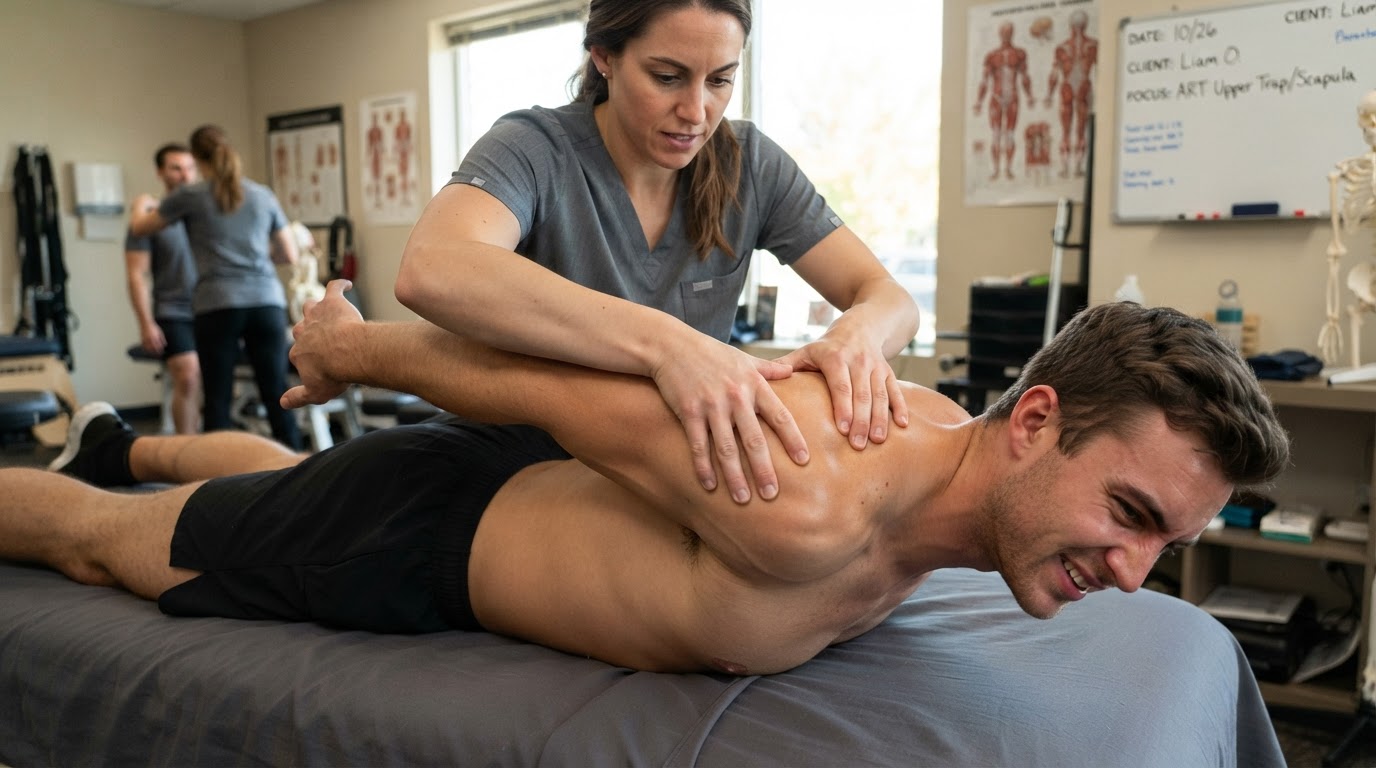
Active Release Techniques (ART): Releasing dense fascial adhesions within the anterior, middle, and posterior scalenes, subclavius, and pectoralis minor muscles, freeing the trapped brachial plexus.
Cervical & Thoracic Spine Adjustments: Correcting subluxations at C5-T1 and the upper thoracic spine to restore normal neurological transmission and postural balance.
Diaphragmatic Breathing Retraining: Teaching patients how to breathe into the belly with the diaphragm rather than chronically overusing the scalene neck muscles during every breath.
Postural & Ergonomic Coaching: Restructuring computer desk heights, armrests, and overhead task rotations to prevent repetitive compression.
Practice belly breathing: place one hand on your chest and one on your abdomen. When you inhale, only your lower hand should rise. If your upper hand and shoulders rise toward your ears, your scalenes are overworking and choking your thoracic outlet.
The takeaway
Thoracic Outlet Syndrome causes cold, numb, heavy arms by compressing nerves and blood vessels beneath the collarbone. Gentle chiropractic mobilization of the first rib combined with Active Release Techniques frees the compressed pathway and provides lasting non-surgical relief.
Related Care & Clinic Guides
Explore how our team supports patients recovering from these specific conditions in Windsor:
 Soft Tissue & Sports