Sciatica in the Front of My Thigh? Understanding Femoral Nerve Pain and Meralgia Paresthetica
D
Dr. Annunciato Angelini
Lead Chiropractor (23+ Years)
|May 17, 2024 9 min read
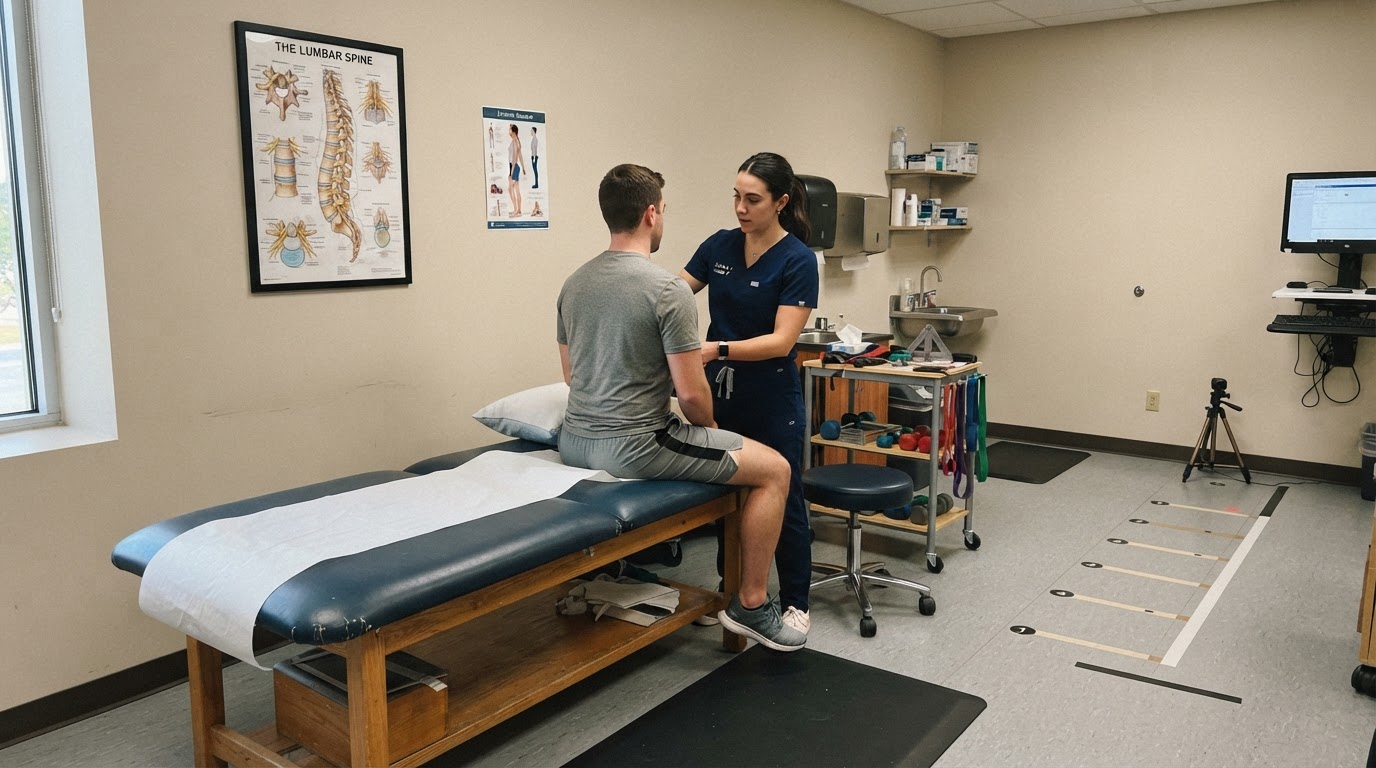
sciatica front of thigh femoral nerve examination bench and lumbar spine model
When most people hear the word 'sciatica,' they picture pain shooting down the back of the leg—through the buttock, hamstring, and calf. But what does it mean when your pain, burning, or pins-and-needles sensation is blazing across the front or the outer side of your thigh? Patients frequently visit our Windsor clinic bewildered, stating: 'Doctor, I have all the classic electric nerve sensations of sciatica, but it's happening entirely in the front of my thigh and groin!' In medical terms, true sciatica only affects the posterior leg. What you are experiencing is likely Femoral Nerve Radiculopathy or Meralgia Paresthetica—two conditions driven by nerve entrapment in the upper lumbar spine or the pelvic inguinal ligament. At Active Chiropractic on Tecumseh Road East in Windsor, Dr. Annunciato Angelini accurately diagnoses and resolves front-thigh nerve disorders using non-surgical spinal decompression, pelvic alignment, and Active Release Techniques.
Anatomy of the Lumbar Plexus: The Sciatic Nerve vs. The Femoral Nerve
To understand front-thigh pain, you must understand how the nervous system in your lower body is divided into two major distinct electrical grids: the sacral plexus and the lumbar plexus. The sacral plexus (derived from L4, L5, S1, S2, and S3) gives rise to the massive sciatic nerve, which travels down the posterior (back) compartment of your leg.
By contrast, the front of your thigh, groin, and knee are wired by the lumbar plexus—primarily the femoral nerve (originating from the L2, L3, and L4 spinal nerve roots) and the lateral femoral cutaneous nerve (LFCN, originating from L2 and L3). The femoral nerve is a major mixed motor and sensory nerve that passes deep through the psoas major muscle in your abdomen, dives beneath the tough inguinal ligament at the fold of your groin, and branches out across the quadriceps muscle group to power knee extension and hip flexion while supplying skin sensation down to your inner shin.
While disc herniations most commonly occur at L4-L5 and L5-S1, approximately 5% to 10% of lumbar disc protrusions develop higher in the lumbar spine—specifically at the L1-L2, L2-L3, or L3-L4 disc levels. Because these discs sit adjacent to the nerve roots that form the femoral nerve, any disc bulge, bone spur (osteophyte), or foraminal stenosis at these levels compresses the femoral nerve roots.
L2 Nerve Root Compression: Deep aching and burning pain radiating through the groin and upper inner anterior thigh.
L3 Nerve Root Compression: Pain, numbness, and hypersensitivity traveling across the mid-front of the thigh directly down to the kneecap (patella).
L4 Nerve Root Compression: Pain crossing the front of the knee and traveling down the inner side of the lower leg (medial shin) into the arch of the foot.
Quadriceps Weakness: Severe femoral radiculopathy frequently causes weakness in the quadriceps muscles, leading to alarming 'knee buckling' or 'giving way' when walking down stairs.
If your symptoms consist of intense burning, stinging, itching, or total numbness localized strictly to the outer, front-lateral surface of your thigh (often described like having hot water poured down your thigh or wearing sandpaper pants), you are likely suffering from Meralgia Paresthetica. Unlike femoral radiculopathy, this condition involves a purely sensory nerve called the lateral femoral cutaneous nerve (LFCN).
The LFCN travels from the lumbar spine through the pelvis and exits into the thigh by passing through an extremely tight anatomical bottleneck directly beneath the inguinal ligament, right near the anterior superior iliac spine (ASIS) of your hip bone. Any factor that increases pressure against this ligament—such as tight tool belts worn by tradespeople, police duty belts, pregnancy, rapid weight gain, prolonged tight waistbands, or prolonged standing with anterior pelvic tilt—mechanically traps and chafes the nerve against the bone.
Many patients spend years taking nerve medications like gabapentin for 'atypical sciatica' when their actual issue is simple mechanical compression of the lateral femoral cutaneous nerve at the groin or an L2-L3 disc bulge. Accurate diagnosis changes everything.
Culprit 3: Psoas and Iliacus Muscle Hypertonicity (The Psoas Spasm Trap)
The psoas major is a massive hip flexor muscle that originates along the transverse processes and lateral bodies of T12 through L5, traveling down the front of the spine through the pelvis to insert on the lesser trochanter of the femur. Crucially, the femoral nerve and the lateral femoral cutaneous nerve literally pierce directly through the flesh and fascial layers of the psoas muscle.
When you sit at a desk for 8 to 10 hours a day in Windsor, your hip flexors are held in a chronically shortened, contracted position. Over months and years, the psoas develops dense myofascial scar tissue, tightens severely, and physically pinches the nerve fibers traveling through it, creating persistent front-thigh pain that worsens every time you stand up and attempt to extend your hip.
Comprehensive Chiropractic Care for Front-Thigh Pain at Active Chiropractic in Windsor
At our Windsor clinic, Dr. Annunciato Angelini provides a targeted, multifaceted clinical protocol to decompress the femoral and LFCN pathways:
Cox® Technic Lumbar Flexion-Distraction: For patients with L2-L3 or L3-L4 disc bulges, gentle decompression lowers intradiscal pressure and opens the neural foramina, relieving upper lumbar nerve root compression.
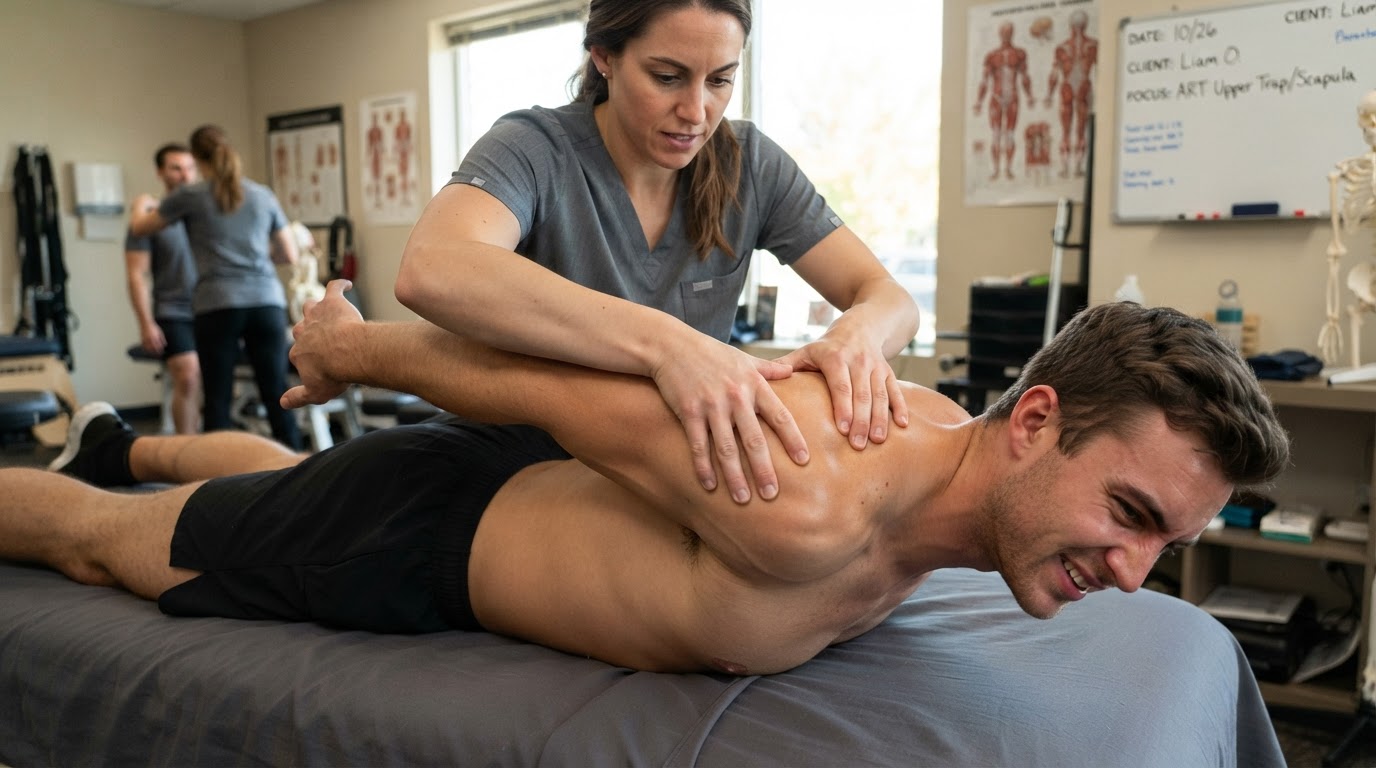
Active Release Techniques (ART) for Psoas and Inguinal Ligament: Specialized hands-on soft tissue protocols that break down adhesions between the psoas muscle, iliacus, inguinal ligament, and the traversing nerves.
Pelvic and Sacroiliac Alignment: Adjusting the ilium and sacrum to eliminate anterior pelvic tilt that increases tension across the inguinal canal.
Computerized Nerve Scans: Verifying reduced autonomic and somatic neuromuscular irritability throughout the lumbar spine.
Ergonomic & Belt Modifications: Advising patients on tool belt suspension systems, loose clothing, and workstation adjustments to prevent mechanical re-entrapment.
If you wear a heavy duty belt, tool belt, or tight work uniform, switch to padded suspenders that distribute the weight across your shoulders instead of cinching tightly against your hips and inguinal ligaments.
The takeaway
Sciatica-like pain in the front or side of your thigh is not true sciatica—it is femoral nerve radiculopathy or meralgia paresthetica. Specialized spinal decompression, pelvic alignment, and Active Release Techniques free the trapped nerve and resolve your pain without surgery.
Related Care & Clinic Guides
Explore how our team supports patients recovering from these specific conditions in Windsor:

 Soft Tissue & Sports