Little League Elbow: Protecting Young Pitchers and Throwing Athletes in Windsor-Essex
D
Dr. Mike Paonessa
Chiropractor & Sports Injury Specialist
|April 26, 2024 9 min read
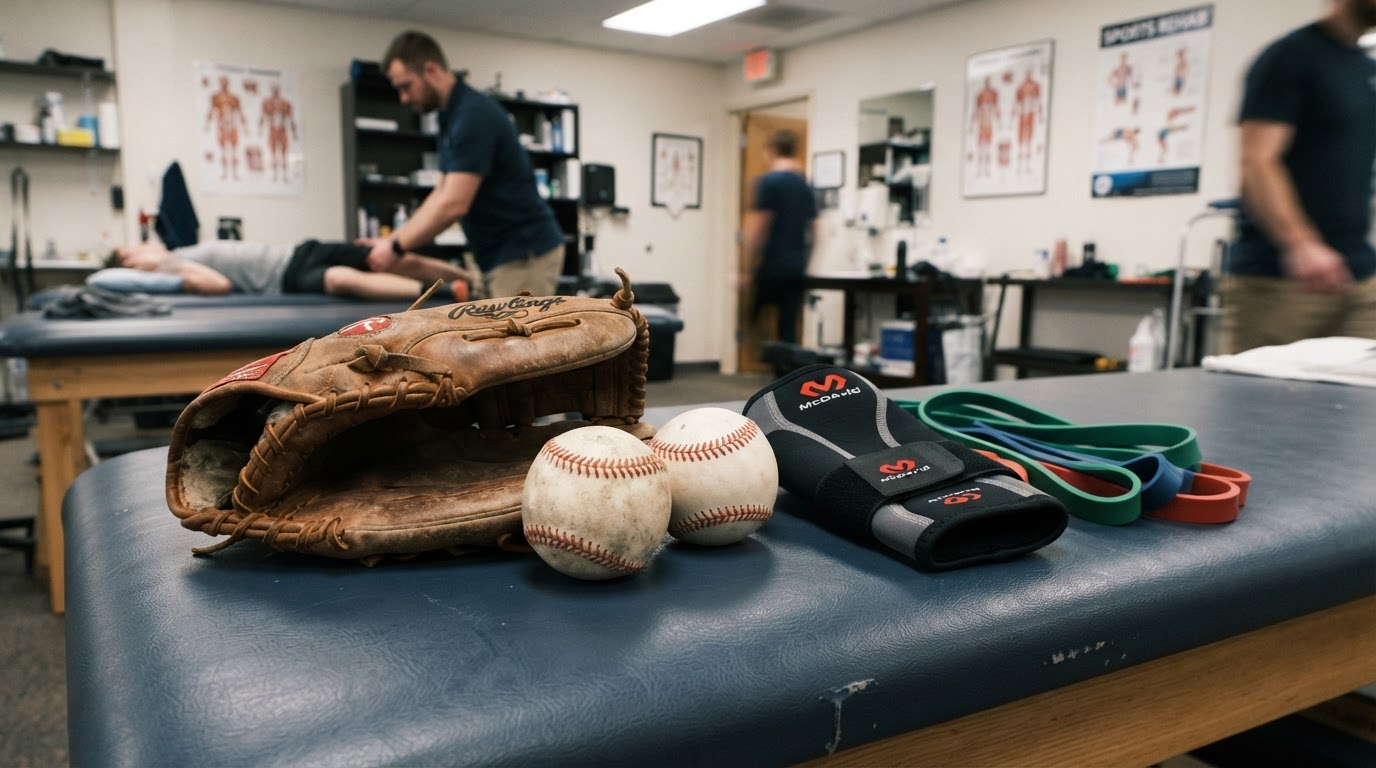
little league elbow youth baseball throwing injury assessment and rehab equipment
Baseball season in Windsor and Essex County brings tremendous excitement—long sunny evenings at Mic Mac Park, high-stakes travel tournaments, and young athletes dedicating hours to perfecting their fastballs and changeups. However, behind the crack of the bat and the excitement of the game lies an alarming and rapidly growing clinical trend: serious repetitive stress injuries affecting the throwing arms of young athletes. The most prevalent of these conditions is 'Little League Elbow' (clinically termed medial epicondylar apophysitis). Unlike adult golfers or tennis players who strain tough fibrous tendons, adolescent athletes face a unique anatomical danger because their skeletal bones are still actively growing. At Active Chiropractic in Windsor, Dr. Mike Paonessa and Dr. Annunciato Angelini provide comprehensive sports injury evaluation, soft-tissue therapy, and biomechanical rehabilitation to protect youth throwing arms from permanent joint damage.
What Exactly Is Little League Elbow? The Vulnerability of Open Growth Plates
To understand why Little League Elbow develops, we must recognize how an adolescent skeleton differs from an adult one. In growing children and teenagers between the ages of 9 and 15, the ends of long bones contain specialized cartilaginous zones known as epiphyseal growth plates (physis and apophysis). The apophysis is an area of growth cartilage where powerful muscle tendons attach directly to bone. In the elbow, the powerful flexor-pronator muscle group—the muscles responsible for snapping the wrist downward and turning the palm during a pitch—attaches to a small bony bump on the inner elbow called the medial epicondyle.
Crucially, in pediatric and adolescent athletes, this cartilaginous growth plate is the weakest link in the entire musculoskeletal chain. While adult throwing athletes are more prone to tearing the ulnar collateral ligament (UCL) requiring Tommy John surgery, young athletes will tear or avulse the growth plate cartilage long before the ligament gives way. Every high-velocity throw generates tremendous valgus extension overload—compressing the outer elbow joint while creating massive distraction and tensile traction on the inner growth plate.
The Biomechanics of a Pitch: Where the Extreme Forces Originate
The overhead throwing motion is one of the fastest, most biomechanically explosive movements in all of human sport. During the late cocking and early acceleration phases of a pitch, an adolescent's arm rotates internally at speeds exceeding 7,000 degrees per second. As the arm cocks back into extreme external rotation, the inner elbow experiences tensile forces that approach the breaking threshold of the medial growth plate.
When a young pitcher throws too many innings without adequate rest, or when they throw complex breaking pitches (such as curveballs or sliders) before their musculoskeletal system has matured, the repetitive traction leads to micro-fractures, chronic inflammation, and widening of the medial apophysis. If ignored, the condition can progress to full avulsion fractures (where the bone fragment is literally pulled off), osteochondritis dissecans (OCD) of the capitellum on the outer elbow, loose joint bodies, and permanent premature growth plate closure.
Recognizing the Early Warning Signs Before Irreversible Damage Occurs
Inner Elbow Pain During or After Throwing: Dull, aching pain on the inner bump of the elbow that sharpens during the cocking or release phase of throwing.
Loss of Pitch Velocity and Control: The young athlete suddenly struggles with accuracy, throws noticeably slower, or begins altering their arm slot to avoid pain.
Swelling, Tenderness, and Warmth: Point tenderness directly over the medial epicondyle bone that hurts when touched or bumped.
Inability to Fully Straighten the Elbow: A progressive flexion contracture where the child cannot completely extend their arm compared to the non-throwing side.
Pain While Gripping or Carrying: Discomfort when carrying heavy backpacks, opening jars, or gripping bats and gloves.
Numbness or Tingling in the Pinky Finger: Irritation to the adjacent ulnar nerve as it passes through the cubital tunnel next to the inflamed growth plate.
Pain is never a normal part of youth sports. If a child says their elbow hurts or they are icing their arm after every game, they need an immediate clinical evaluation. Pitching through growth plate pain can end a sports career before high school even begins.
The Root Culprits: Pitch Counts, Overuse, and Flawed Biomechanical Chains
While pitch counts are critical, Little League Elbow is rarely caused by the elbow acting alone. The throwing motion is a full-body kinetic chain event that begins in the feet, transfers through the legs, pelvis, and lumbar spine, rotates through the thoracic spine and core, and is channeled through the scapula and shoulder before finally arriving at the elbow and wrist. If any link in that chain is weak or restricted—such as tight hips, restricted thoracic rotation, poor core stability, or scapular dyskinesis—the elbow is forced to absorb massive compensatory torque to generate ball speed.
Furthermore, the rise of year-round single-sport specialization—where young athletes play on multiple club and school teams simultaneously without seasonal shutdowns—eliminates the vital months of non-throwing rest necessary for pediatric growth plates to remodel and strengthen.
Comprehensive Clinical Care and Return-to-Play Protocol at Active Chiropractic
At our Windsor clinic, Dr. Mike Paonessa and Dr. Annunciato Angelini implement an evidence-based sports injury rehabilitation protocol for youth throwing athletes:
Full Kinetic Chain Evaluation: Assessing pelvic symmetry, thoracic spine rotation, shoulder internal/external rotation balance (GIRD), and scapular stability.
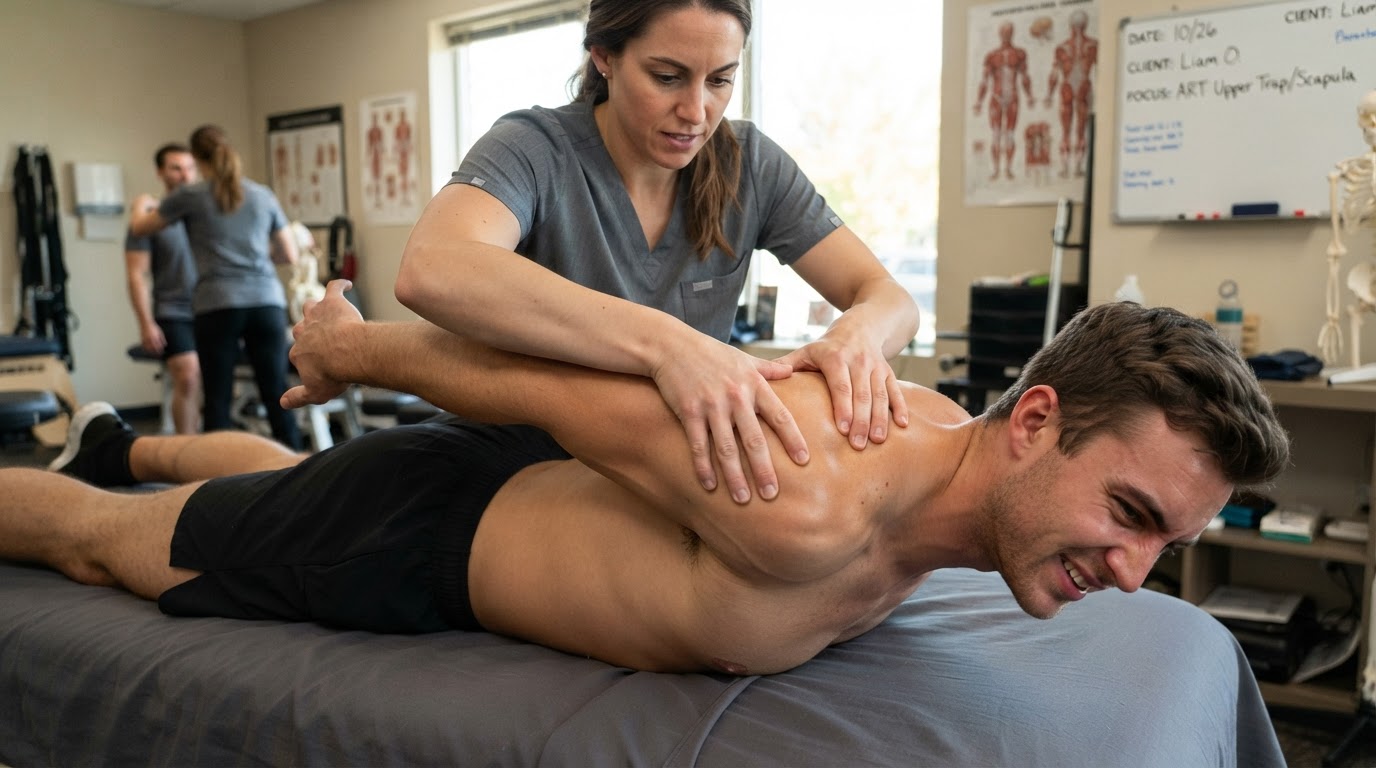
Active Release Techniques (ART): Releasing dense fascial adhesions and hypertonicity in the forearm flexor-pronator mass, triceps, and rotator cuff without stressing the fragile growth plate.
Chiropractic Joint Alignment: Gentle mobilization of the thoracic spine and cervical spine to ensure unrestricted rotational freedom throughout the kinetic chain.
Targeted Scapular and Rotator Cuff Strengthening: Progressive eccentric exercises and posterior shoulder strengthening to create a solid decelerating platform for the arm.
Strict Pitch-Count & Arm-Care Education: Implementing USA Baseball Pitch Smart guidelines and structured progressive throwing programs before game clearance.
Enforce strict seasonal rest: youth pitchers should never pitch competitively for more than 8 months out of any calendar year, and should take at least 3-4 consecutive months of complete rest from overhead throwing every winter.
The takeaway
Little League Elbow involves fragile, open growth plate cartilage that requires prompt clinical attention. By resolving kinetic chain restrictions, releasing forearm muscle tension with ART, and respecting safe pitch counts, young athletes can throw with power, precision, and longevity.
Related Care & Clinic Guides
Explore how our team supports patients recovering from these specific conditions in Windsor:

 Soft Tissue & Sports