Active Release: The Secret Weapon for Stubborn Sports Injuries
D
Dr. Mike Paonessa
Chiropractor, Active Chiropractic Windsor
|September 25, 2026 9 min read
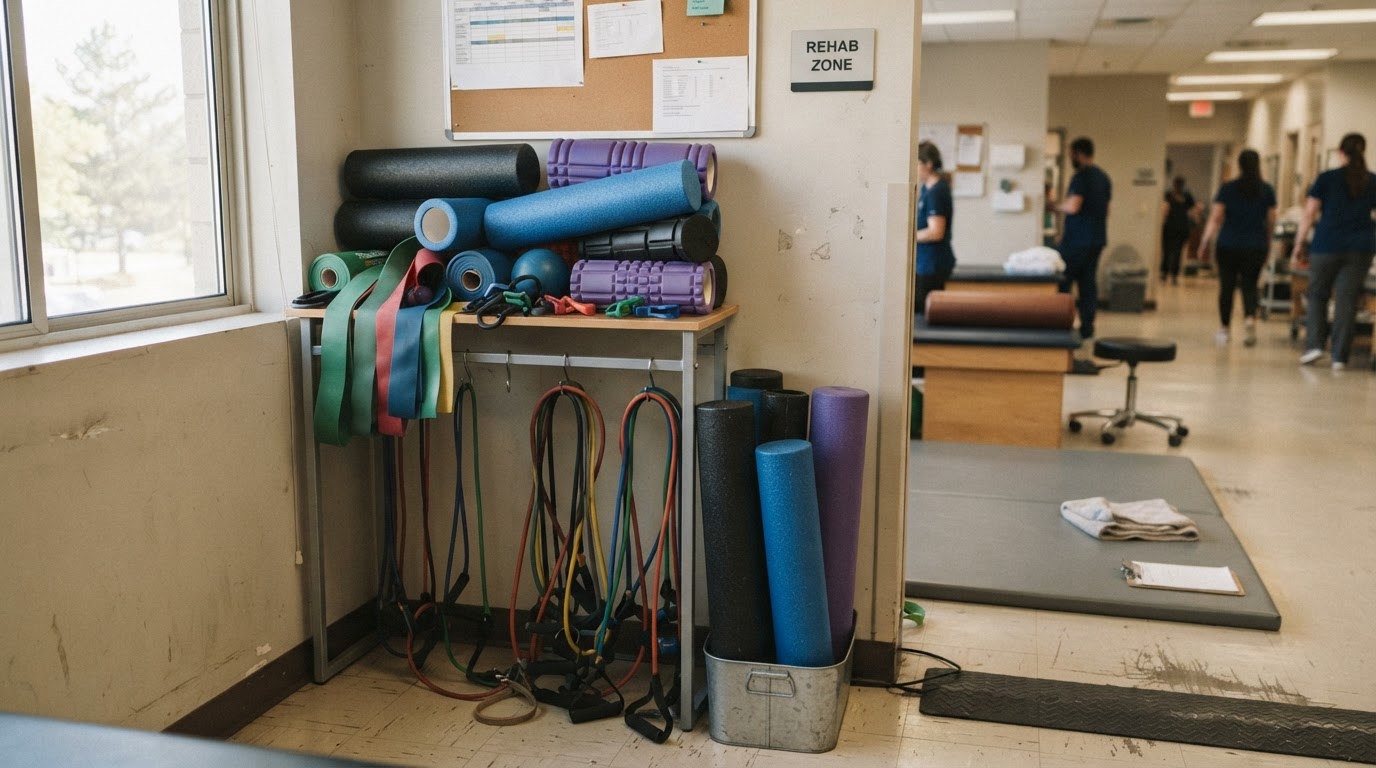
athletic mobility training equipment foam rollers and bands for sports injury recovery
You rested it. You iced it. You stretched it. You even took a few weeks off. And the moment you start training again, that same ache comes right back, right where it was before. If that sounds like your tennis elbow, your Achilles, your rotator cuff, or that stubborn hip flexor, the problem probably is not the muscle itself. It is the scar tissue stuck inside it. At Active Chiropractic in Windsor, we see this pattern constantly in runners, hockey players, crossfitters, golfers, and weekend warriors across Essex County. The good news is that once you understand what scar tissue actually is and why rest alone cannot fix it, there is a direct, hands-on solution that gets athletes back to training without the ache returning. In this guide, we break down how Active Release Techniques works, why it succeeds where rest and stretching fail, and what to expect when you add it to your athletic rehabilitation plan.
What scar tissue actually is, and why it does not stretch
Every time a muscle or tendon gets a small injury, whether from a single acute strain or thousands of tiny repetitive stresses, your body patches the damage with scar tissue. This is a normal part of healing, but it comes with a catch. Scar tissue is not like healthy muscle. It is tough, it is sticky, and it does not stretch or slide the way healthy tissue does. Healthy muscle fibers glide smoothly across one another like sheets of silk. Scar tissue acts more like glue, binding adjacent layers together and restricting the natural movement that every muscle needs to function.
Over months of training, those patches build up. A little here from last season's shoulder strain, a little there from the repetitive loading of your running stride, a little more from the grip work in the gym. The muscle gradually loses its ability to move freely, the tissue around the scarred area gets overloaded because it is compensating for the stuck portion, and that is the chronic ache that will not quit. You feel it most when you push hard, because that is when the stuck tissue is asked to stretch and cannot.
Why rest and stretching alone never break the cycle
This is the part that frustrates athletes the most. Rest makes the pain go away, temporarily, because you have stopped asking the stuck tissue to move. But the scar tissue is still there, exactly as stuck as it was before. The moment you return to training and load the muscle again, the adhesions catch, the surrounding tissue overloads, and the pain returns. It is like loosening a rusted hinge by leaving it alone, the rust does not go anywhere just because you stopped using the door.
Stretching has the same limitation. You can stretch all day, but a stretch pulls the entire muscle evenly. It cannot target the specific adhesion buried deep between two layers of tissue. In fact, aggressively stretching an area that is bound down by scar tissue can sometimes make things worse, because it pulls harder against the stuck spot and irritates the surrounding healthy tissue. To actually fix the problem, you need something that can find the exact adhesion and break it apart directly. That is exactly what Active Release Techniques is built to do.
How Active Release fixes it: targeted tension with movement
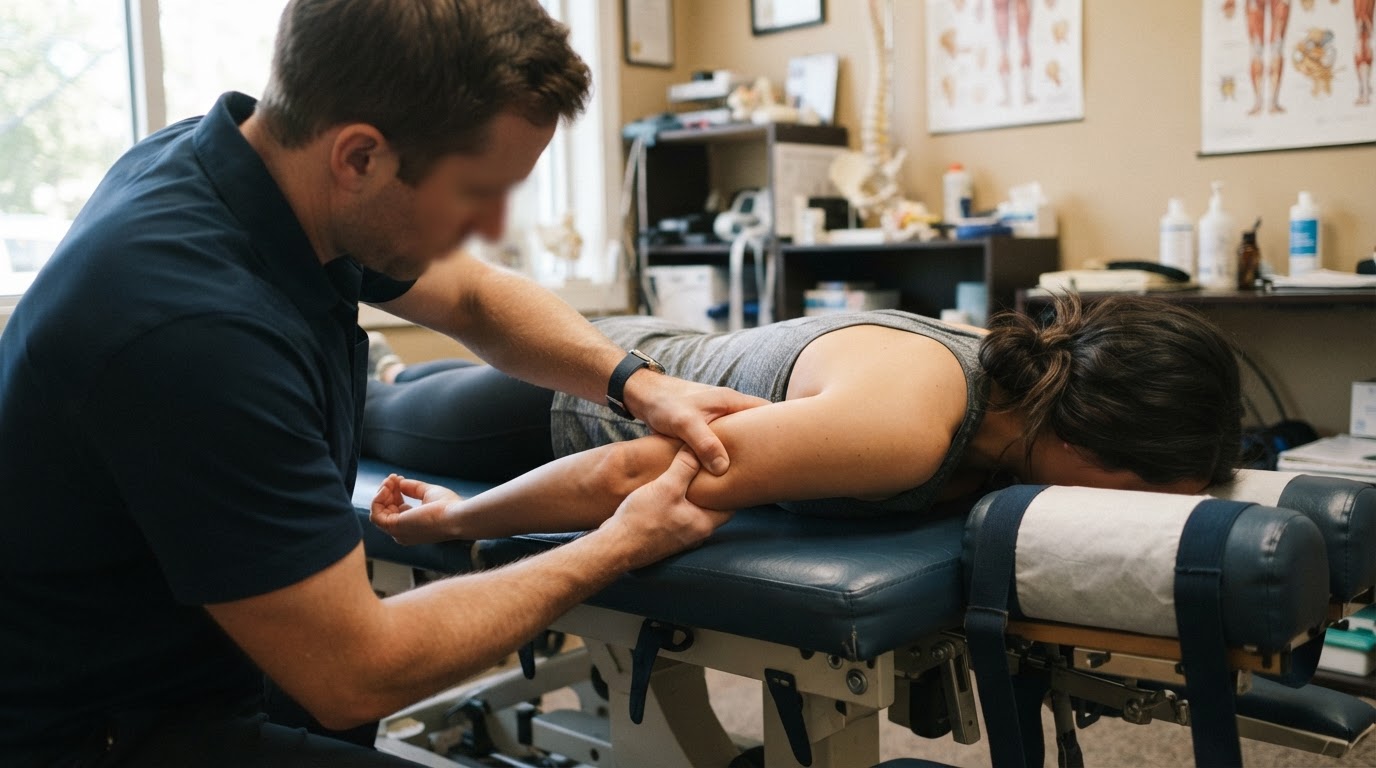
ART is a hands-on technique where we find the exact spot of scar tissue and apply precise, directional tension with our fingers or thumb, while you actively move the muscle through its full range of motion. The combination of the doctor's tension and your movement creates a shearing force that physically breaks the adhesions apart, restoring the natural slide between tissue layers. It is not a massage. Massage works broadly across the surface of a muscle to improve circulation and relaxation. ART is targeted, specific, and it works fast because it addresses the actual mechanical problem, not just the symptoms around it.
Because you are actively moving during the treatment, the muscle is lengthening in real time beneath the doctor's contact, which is what allows the adhesion to be sheared away rather than just pushed on. This is also why ART is so effective at freeing entrapped nerves. When scar tissue glues a nerve to the surrounding muscle, the nerve cannot glide as you move, and that is a major cause of the numbness, tingling, and radiating pain that athletes often mistake for a more serious injury. ART frees the nerve from the adhesion, restoring its normal glide and often resolving symptoms that stretching and rest never could.
The sports injuries that respond best to ART
Over more than two decades of treating athletes in Windsor, we have found that ART is remarkably effective for a specific family of stubborn, recurrent conditions, the ones that keep coming back every time training ramps up:
Tennis elbow and golfer's elbow, the chronic tendon pain on the inner or outer elbow that haunts racquet sport players and weightlifters
Achilles tendonitis and shin splints, the lower-leg pains that derail runners and field-sport athletes
Rotator cuff and shoulder impingement, the pinching pain that flares with overhead lifting, throwing, or swimming
Plantar fasciitis, the stabbing heel pain that makes the first steps of the morning miserable
Carpal tunnel and pinched nerves, the numbness and tingling that affects grip and fine motor control
IT band syndrome and hip flexor strains, the lateral knee and front-of-hip pains that plague runners and cyclists
Hamstring strains and chronic groin pulls, the sprinting and skating injuries that recur season after season
What all of these have in common is that they are overuse conditions driven by repetitive loading, which is exactly the environment that produces scar tissue in the first place. That is why they respond so well to a treatment that directly removes that scar tissue, rather than just resting the area and hoping it heals differently the next time.
Athletes are usually amazed that the painful spot is also the fix. It is uncomfortable for a moment as the adhesion breaks, and then the movement comes back almost immediately. That immediate change, from stuck to sliding, is what makes ART so different from anything else they have tried.
Why ART is used in every major professional sport
Active Release Techniques was developed by Dr. P. Michael Leahy, a chiropractor and aeronautical engineer who originally worked with Olympic track athletes and NFL players. Today, ART is used in every NHL locker room, NFL training facility, MLB bullpen, and at the Ironman World Championship in Kona. The reason is simple: it fixes soft-tissue injuries faster and more completely than anything else, and it does so without medication, injections, or downtime. For a professional athlete, that means returning to play sooner. For a weekend warrior, it means getting back to the activities that keep you sane without losing your whole season to a nagging injury.
Because ART is an active treatment, athletes can often continue modified training throughout their care plan rather than sitting idle. We work with you to adjust your training load so you stay fit while the underlying tissue heals, which is far better for both your performance and your mental health than the traditional 'just stop everything for six weeks' approach.
What to expect during and after an ART session
An ART session is hands-on and interactive. You stay fully clothed in comfortable athletic wear, and you will be moving throughout the treatment as we work through each restricted area. The sensation is often described as a 'good hurt,' similar to the feeling of a deep stretch that hits exactly the right spot. Some soreness afterward is normal, similar to the feeling after a hard workout, and usually resolves within a day or two. Most athletes notice an immediate improvement in range of motion and a reduction in pain after just the first session, with cumulative benefits over a course of care.
We pair ART with a full assessment of your biomechanics, because the scar tissue is often a symptom of an underlying movement problem. If your hip mobility is restricted, your lower back will compensate and eventually develop adhesions. If your foot arches collapse, your Achilles will overload and scar. Finding and correcting these patterns, sometimes with custom orthotics, sometimes with specific strengthening, is what keeps the scar tissue from simply returning after treatment.
If an injury has lingered more than a few weeks despite rest, it is almost always scar tissue, and rest alone will never break it up. That is exactly what ART is built for. The sooner the adhesions are cleared, the sooner you are back to training without the ache returning.
The takeaway
Chronic sports pain is often scar tissue, not weakness. Breaking it up directly with Active Release Techniques is what finally gets you back to training without the ache returning. Combined with a proper biomechanical assessment, ART does not just relieve the pain, it addresses the reason it kept coming back in the first place.
Related Care & Clinic Guides
Explore how our team supports patients recovering from these specific conditions in Windsor:
 Soft Tissue & Sports